
The short answer
Energy typically runs 4-8% of revenue in a 25–300 room Indian hotel, making it the third-largest P&L line after payroll and food, and the one almost nobody manages actively. What makes it unique is that it runs 24 hours a day, 365 days a year: waste compounds silently every hour, and so does every fix — a setting changed once keeps paying back every night.
After payroll and food cost, the biggest line on most Indian hotel P&Ls is one almost nobody manages actively: electricity and fuel. Energy typically runs 4–8% of revenue in a 25–300 room property, and commercial tariffs have only moved one direction. Owners scrutinise a ₹3,000 purchase order and sign a ₹9 lakh monthly electricity bill without reading past the total.
Here is what makes energy unique among your costs: it runs 24 hours a day, 365 days a year. That cuts both ways. Waste compounds silently every hour — and so does every fix. A setting changed once keeps paying you back every single night. That is why energy belongs at the centre of any serious effort at protecting hotel margins, not at the bottom of the engineering to-do list.
Find the Money: Where Hotel Energy Actually Goes
In most Indian mid-market hotels, HVAC is the dominant consumer — often 40–60% of the electricity bill — followed by lighting, kitchen and laundry, pumps, and the lift. The implication is blunt: if your energy program doesn't start with air conditioning, it isn't an energy program. Pull your last 12 electricity bills, note the connected load, demand charges, and power factor penalties, and you will usually find your first savings before touching a single machine.
Capture the No-Capex Wins First
Before anyone proposes new equipment, harvest the savings that cost nothing but discipline:
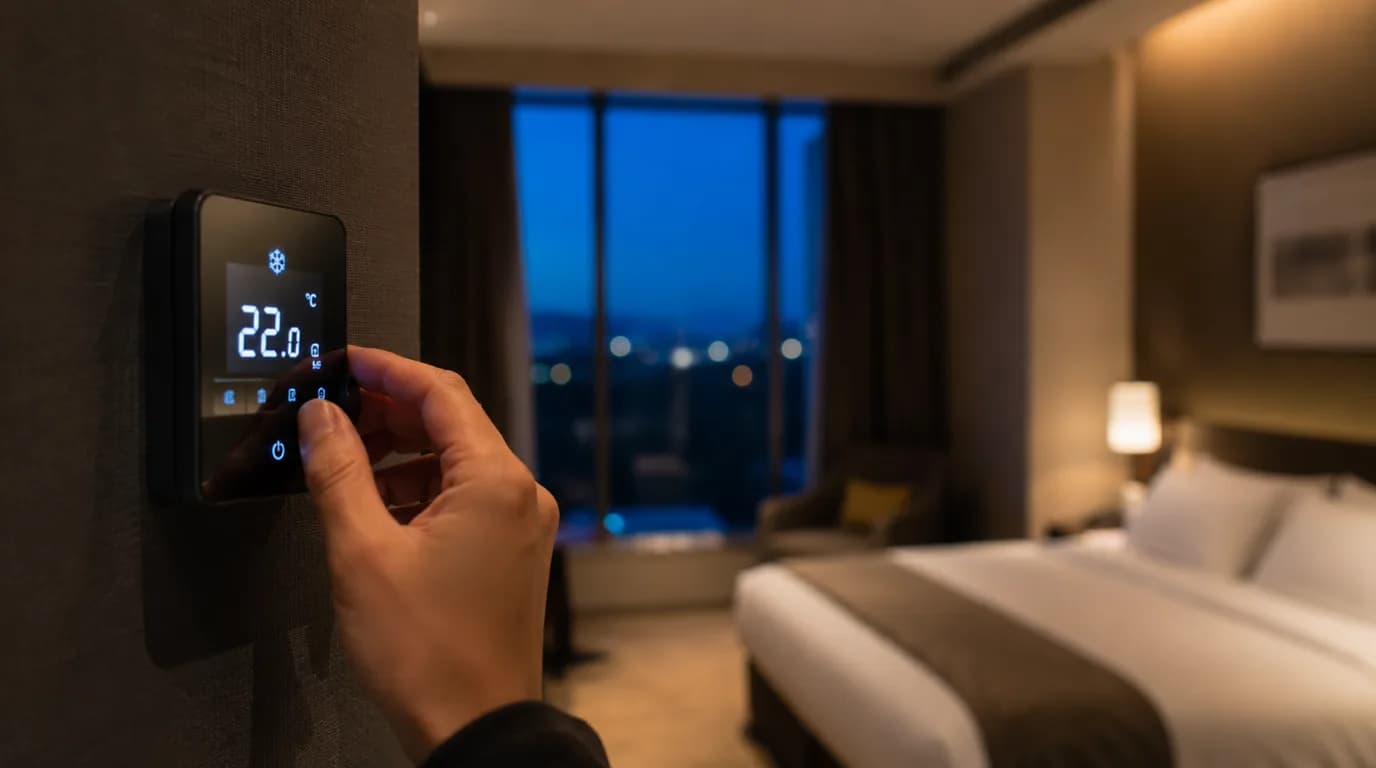
- HVAC setpoints and schedules — standardise guest areas at 23–24°C instead of the 18°C arms race; pre-cool banquet halls 45 minutes before events, not three hours; shut down AHUs in closed venues
- Key-card power cutoffs actually working — in many hotels they are bypassed in half the rooms; audit and fix
- Finish the LED conversion — most properties are 80% done and leave back-of-house, basements, and façade on old fittings for years
- Kitchen exhaust discipline — hoods running at full speed from 6 am to midnight regardless of cooking load; run them with the burners, not the shift
- Laundry batching — full loads only, washing scheduled into fewer, fuller cycles, and where tariffs allow, into cheaper time-of-day slots
These habits alone typically trim a meaningful single-digit percentage off the bill — pure margin, captured with a briefing and a checklist.
Spend a Little, Save a Lot: Low-Capex Upgrades
Once discipline is in place, deploy small capital where payback is fast:
- Occupancy sensors in corridors, staircases, public toilets, and back-of-house — areas lit 24/7 for nobody
- Timers and photocells on façade, signage, and garden lighting so they follow the sun, not somebody's memory
- BLDC fans in staff areas and fan-cooled rooms, drawing a fraction of conventional fan power
- Insulation on hot-water lines and tanks, and fixing the steam and air leaks everyone has stopped hearing
Most items on this list pay back within 6–18 months. Sequence them by payback and fund the next from the savings of the last.
Maintenance Is an Energy Strategy
A choked AC filter makes the compressor work harder for the same cooling; a scaled geyser burns more units per litre; a slipping pump runs longer for the same head. Dirty, neglected equipment quietly consumes 10–20% more energy to do the same job. This is where your preventive maintenance program and your energy program become the same program: every filter clean, coil wash, and descaling job is also an energy intervention. If you needed one more reason to fund the PM calendar, your electricity bill is it.
Answer the Solar Question Properly
Every Indian hotel owner is being pitched rooftop solar in 2026, and for many properties it genuinely works — daytime loads are high, roofs are large, and payback typically lands in the 3–5 year range with system life far beyond that. But "typically" is doing work in that sentence. Do the feasibility honestly: actual roof area net of tanks and equipment, structural capacity, your daytime load profile versus generation curve, your state's net-metering rules, and vendor quality. Get two independent proposals, check references at operating hotels, and model ROI on your numbers, not the brochure's. Solar done right is one of the best capital decisions available to you; solar done on a salesman's spreadsheet is a decade of regret on your roof.
Sub-Meter, Then Review Monthly
You cannot manage one giant number. Install sub-meters — they are inexpensive now — on your biggest consumers: chiller/HVAC, kitchen, laundry, and floors if practical. Then run a 30-minute monthly energy review tracking units per occupied room as your headline metric, alongside cost per occupied room and demand charges. When consumption per occupied room jumps with no occupancy explanation, you have a diagnosis to run, not a bill to sigh at. Put the number on the same dashboard as RevPAR; what the GM watches, the building obeys.
Use Energy as a Sales Asset, Not Just a Saving
One more reason this matters in 2026: corporate clients increasingly ask about sustainability in RFPs, and travel managers must report on it. A hotel that can show LED conversion, solar generation, and a tracked energy-per-room-night figure has a real answer where competitors shrug. The same program that cuts your costs strengthens your corporate sales pitch.
Start This Month
- Pull 12 months of energy bills and calculate units and cost per occupied room.
- Run a one-day audit of setpoints, key-card cutoffs, exhaust running hours, and remaining non-LED fittings.
- Fix the top three no-capex leaks this week and brief every department.
- Price occupancy sensors and timers for your five most wasteful areas.
- If you have roof space, commission a proper solar feasibility — two independent quotes, your own load data.
Energy is the rare cost you can cut without a guest ever noticing — and most hotels are leaving lakhs on the table annually. If you want a structured energy and cost review for your property, book a 30-minute strategy call and we will find where your building is overspending.
Owner's guides
Brand selection, pre-opening & feasibility playbooks — download instantly.
Frequently Asked Questions
Quick answers on how to cut hotel energy costs: your third-largest expense in 2026.
In most Indian mid-market hotels HVAC is dominant, often 40-60% of the electricity bill, followed by lighting, kitchen and laundry, pumps and the lift. The implication is blunt: if your energy programme does not start with air conditioning, it is not an energy programme.
Standardising HVAC setpoints in guest areas at 23-24°C instead of an 18°C arms race; pre-cooling banquet halls 45 minutes before an event rather than three hours; shutting down air handling units in closed venues; and enforcing key-card power cut-offs.
Occupancy sensors in corridors, staircases, public toilets and back-of-house that are lit 24/7 for nobody, and timers or photocells on facade, signage and garden lighting so they follow the sun rather than somebody's memory.
A great deal. A choked AC filter makes the compressor work harder for the same cooling, a scaled geyser burns more units per litre, and a slipping pump runs longer for the same head. Dirty, neglected equipment quietly consumes 10-20% more energy to do the same job.
For many properties it genuinely works — daytime loads are high, roofs are large, and payback typically lands in the 3-5 year range with system life far beyond that. But typically is doing a lot of work in that sentence, so do the feasibility on your own load profile and tariff.

Written by
Rachit Goel
Founder & Principal Hospitality Consultant
Founder of The Hotel Adviser and a hospitality leader with 25+ years of hands-on experience across Marriott, Radisson, Ramada and Taj — spanning pre-opening, operations, revenue management and food & beverage.