
The short answer
Housekeeping is typically the largest operational cost in the rooms division and responds to management faster than almost any other line, which is why cost per occupied room (CPOR) is the first number a GM reaches for. It is also the easiest number to cut badly: squeeze it carelessly and the savings appear this quarter while tired rooms, slipping review scores and attrition among the best attendants appear next year. The target is the lowest cost at which the standard is fully protected.
When occupancy softens or costs climb, housekeeping is usually the first department a GM scrutinizes — and cost per occupied room (CPOR) is the number everyone reaches for. Rightly so: housekeeping is typically the largest operational cost in the rooms division, and it responds to management faster than almost any other line.
But CPOR is also the easiest number to cut badly. Squeeze it carelessly and savings show up this quarter while the damage — tired rooms, slipping reviews, attrition among your best attendants — shows up next year. As I argue in hotel cost control, the goal is never the lowest cost; it is the lowest cost at which your standard is fully protected. Here is how to get there.
Know What's Actually in the Number
Housekeeping CPOR should capture every rupee the department spends, divided by occupied room nights. That means:
- Labour — salaries, wages, overtime, and contract staff, usually 55–70% of the total.
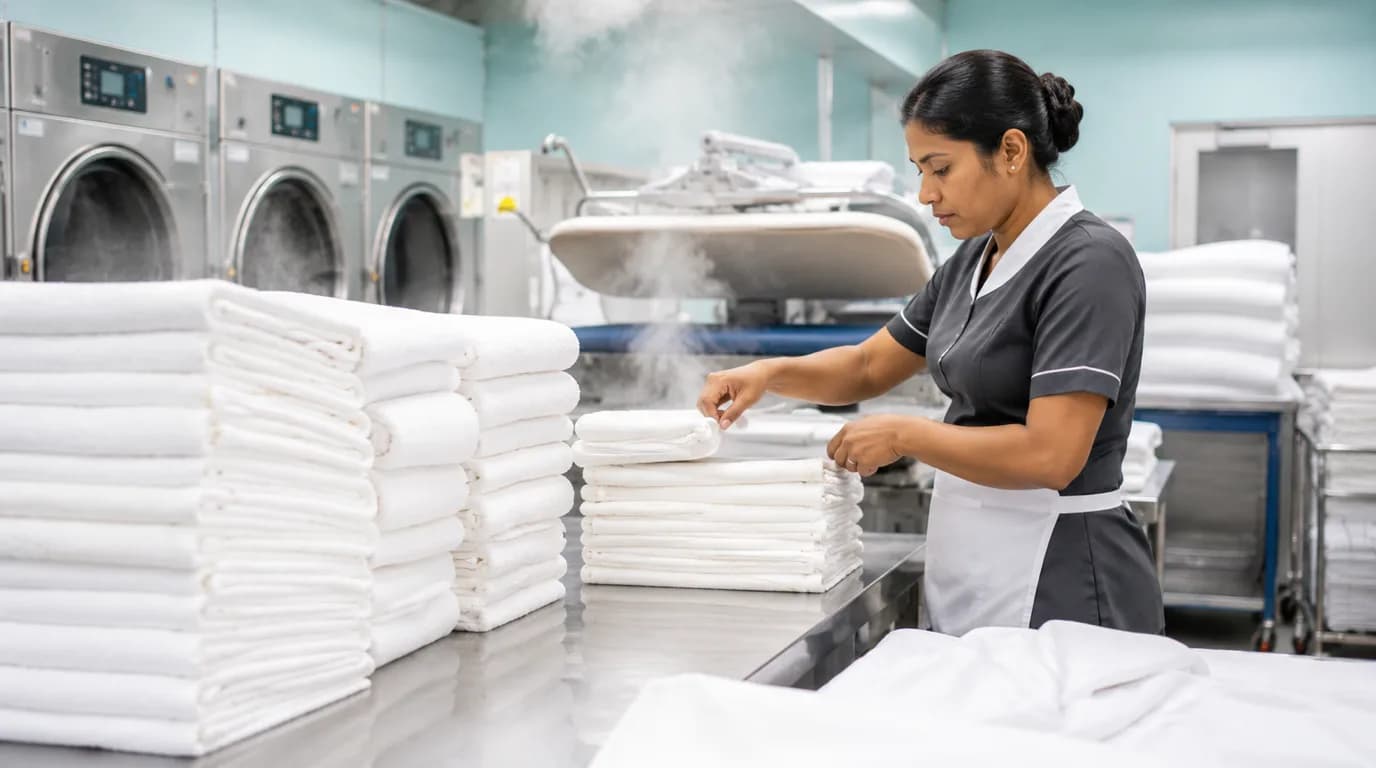
- Laundry — in-house operating cost or outsourced per-piece billing.
- Linen and terry — amortized replacement cost, not just purchases in the month.
- Guest amenities — toiletries, water, dental kits, slippers.
- Cleaning chemicals and supplies — and the equipment that applies them.
If your accounts lump some of this into "general stores" or hide laundry inside F&B, fix the mapping first. A CPOR built on incomplete costs misleads every decision that follows.
Measure It Per Occupied Room, Monthly
The denominator matters as much as the numerator. Divide by occupied rooms, never by available rooms — available-room math flatters you in high season and panics you in low season, while saying nothing about efficiency. Calculate it monthly, trend it across twelve months, and read it against occupancy: a well-run department shows CPOR falling modestly as occupancy rises, because fixed labour spreads over more rooms. If CPOR rises with occupancy, overtime and casual staffing are running unmanaged.
Benchmark against yourself first. Cross-hotel comparisons are tricky — a 40-room leisure property with large suites has a different cost structure from a 200-room city business hotel — but your own trend line never lies.
Set Rooms-per-Attendant Standards by Room Type
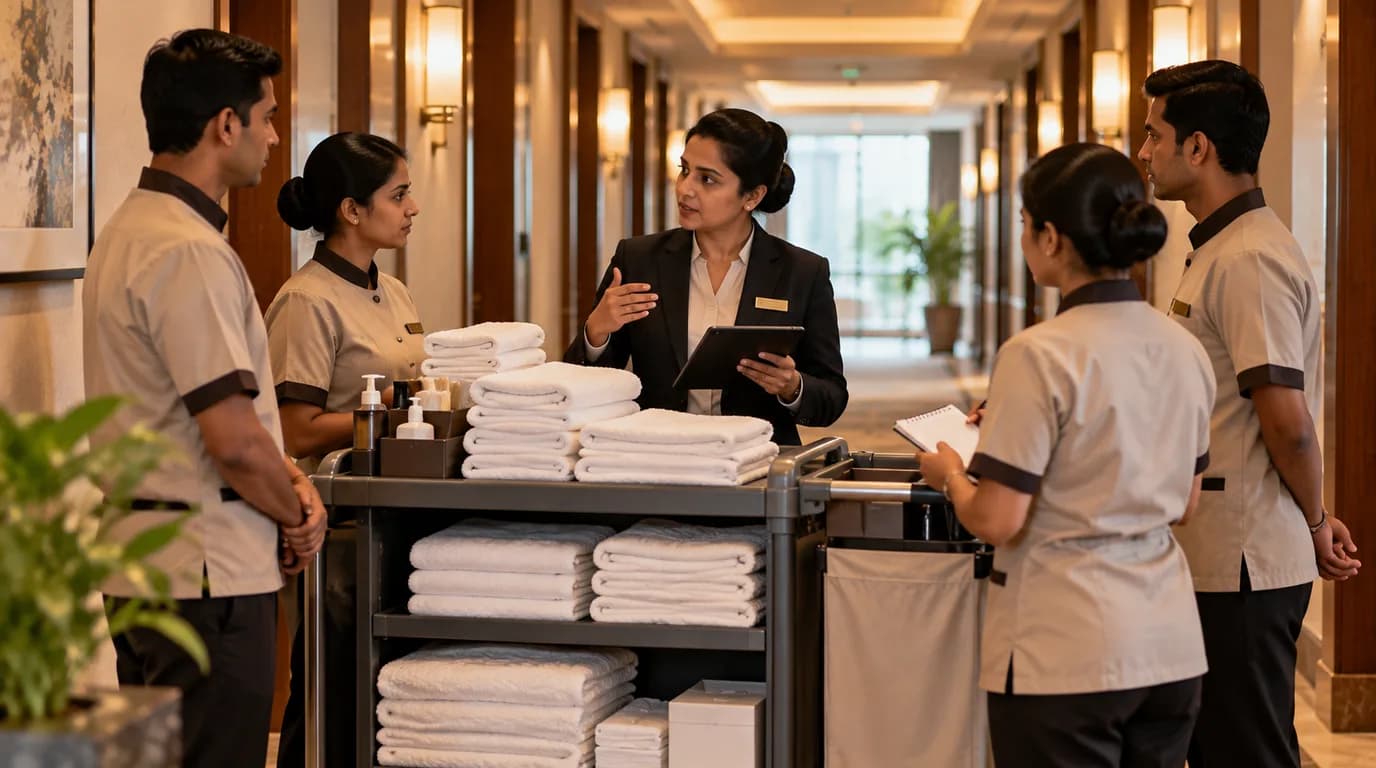
Labour productivity is the single biggest lever, and it starts with an explicit standard. In Indian hotels, realistic ranges run around 12–16 rooms per attendant per shift, depending on room size, service standard, and the departure/stayover mix — a compact business hotel room sits at the top of that range, a large suite or villa well below it. The standard must distinguish departure rooms (full make-up) from stayover touch-ups, because a day of heavy checkouts is genuinely slower.
Then manage to it daily: the executive housekeeper's morning allocation should be built from the actual house count, not a fixed roster. On a 45%-occupancy monsoon Tuesday, the same team size as a 90% wedding Saturday is simply money evaporating.
Sequence the Work Intelligently
Productivity isn't only speed in the room — it's wasted motion between rooms. Cluster each attendant's allocation by floor and wing, prioritize early departures and arrival rooms against the day's check-in forecast, and stock trolleys completely before the shift starts so nobody walks back to the floor pantry six times. Pair this with sensible scheduling: stagger shifts to match checkout and check-in waves rather than running a flat 9-to-5 roster against a workload that peaks twice a day.
Control Linen, Chemicals, and Amenities at the System Level
- Linen par stock: hold roughly 3 par (one in the room, one in the wash, one on the shelf) — below that you'll over-wash and destroy linen life chasing shortages; far above it, capital sits dead in the store. Track discards monthly and investigate spikes.
- Chemical dilution control: free-pouring concentrate is one of housekeeping's classic silent leaks. Dosing dispensers or measured caps typically cut chemical cost by a clearly visible margin while improving cleaning consistency.
- Amenity right-sizing: match the amenity set to the guest and rate segment. Bulk dispensers in standard rooms, fuller kits in suites, replenishment on request rather than automatic daily replacement. The line to respect is perception — guests forgive a wall-mounted dispenser; they do not forgive a room that feels cheapened.
Run the Laundry Decision on Numbers, Not Habit
In-house versus outsourced laundry is a genuine economic question, and the honest answer depends on your scale. Work out your true in-house cost per kilo — utilities, chemicals, labour, machine depreciation, and space — and compare it with outsourced per-piece rates including transport and the extra par stock outsourcing demands (turnaround delays mean more linen in circulation). Smaller properties often find outsourcing cheaper once depreciation is honestly counted; larger ones with steady volume usually keep laundry in-house. Revisit the math every couple of years; it changes as volumes and utility tariffs do.
Never Cross the Cleanliness Line
Every lever above has a boundary, and it is the same one: cleanliness is the single most unforgiving driver of guest reviews. A guest will excuse a dated lobby; they will never excuse a stained sheet, and they will tell the internet about it. The discipline of protecting standards while cutting waste is exactly what separates a great department head from an average one — the qualities I describe in executive housekeeper are, in the end, your real CPOR control system. Invest in that leadership, train relentlessly, and inspect what you expect.
Start This Month
- Rebuild your CPOR with every cost component correctly mapped, and trend it twelve months back.
- Write rooms-per-attendant standards by room type and build daily allocations from the house count.
- Audit linen par stock and discards, and install chemical dosing control.
- Run the in-house vs outsourced laundry math with full depreciation included.
- Tie it to quality: review CPOR alongside cleanliness review scores in the same monthly meeting.
If your housekeeping costs feel high but you're not sure which lever is safe to pull, book a 30-minute strategy call and we'll benchmark your numbers together.
Owner's guides
Brand selection, pre-opening & feasibility playbooks — download instantly.
Frequently Asked Questions
Quick answers on housekeeping cost per occupied room: benchmarks and how to control it.
Every rupee the department spends, divided by occupied room nights: labour including overtime and contract staff, usually 55-70% of the total; laundry, whether in-house operating cost or outsourced per-piece; linen and terry; plus chemicals, amenities and supplies.
Occupied rooms, never available. Available-room maths flatters you in high season and panics you in low season while saying nothing about efficiency. Calculate it monthly and trend it across twelve months.
In Indian hotels, around 12-16 rooms per attendant per shift depending on room size, service standard and the departure-to-stayover mix. A compact business hotel room sits at the top of that range; a large resort room sits lower.
Roughly 3 par — one in the room, one in the wash, one on the shelf. Below that you over-wash and destroy linen life chasing shortages; far above it, capital sits dead in the store. Track discards monthly and investigate spikes.
Yes, and it is the same boundary for every lever: cleanliness is the single most unforgiving driver of guest reviews. A guest will excuse a dated lobby and will never excuse a stained sheet — and will tell the internet about it.

Written by
Rachit Goel
Founder & Principal Hospitality Consultant
Founder of The Hotel Adviser and a hospitality leader with 25+ years of hands-on experience across Marriott, Radisson, Ramada and Taj — spanning pre-opening, operations, revenue management and food & beverage.