
The short answer
Two hotels can earn identical revenue and report very different profits, and the gap is rarely one big decision — it is a hundred small ones on the cost side. Cost control is the fastest-paying work in a hotel because every rupee of waste removed drops straight to the bottom line with no extra guest required. The discipline is removing waste guests never notice while protecting everything they do notice; cut the wrong things and you lose reviews, repeat business and rate later.

Two hotels can earn identical revenue and report very different profits. The difference is rarely one big decision — it's a hundred small ones on the cost side, made well or made carelessly. As a hotel operations consultant, I spend a lot of time here, because cost control is the most reliable, fastest-paying work in the business: every rupee of waste you remove drops straight to the bottom line, with no extra guest required.
The discipline in 2026 isn't slashing budgets — it's removing waste guests never notice while protecting everything they do. Cut the wrong things and you save a little now and lose reviews, repeat business and rate later. Here's how to get it right.
Start with the cost lines that actually move the needle
Not all costs are equal. In a typical Indian hotel, a handful of lines dominate the controllable cost base:
- Labour — usually the single largest controllable cost. The lever isn't lower wages; it's productivity and scheduling to demand.
- F&B cost of goods — recipe discipline, portion control, purchasing and waste.
- Energy and utilities — small, compounding fixes that run every hour of every day.
- Distribution costs — OTA commissions and channel fees that creep up unnoticed.
- Maintenance and consumables — reactive repairs and over-ordering of supplies.
Fix these five and you've addressed the vast majority of avoidable margin leakage.
Labour: schedule to demand, not to habit
Most labour waste comes from staffing to a fixed roster instead of to actual occupancy and arrivals. The fix is to plan shifts around demand patterns — arrivals and departures by hour, restaurant covers by daypart, banquet schedules — and to cross-train so a smaller, more flexible team covers peaks without idle time in the troughs.
Productivity per available room is the metric to watch. The goal is a team that's busy and supported, not stretched thin or standing around — both of which cost you, one in quality and one in cash.
F&B: where margin quietly disappears
Food and beverage is where small leaks add up fastest:
- Recipe and portion standards — without them, cost percentages drift every week.
- Purchasing discipline — competitive vendors, the right specifications, no maverick buying.
- Waste tracking — what gets thrown away is pure lost margin; measure it and it shrinks.
- Menu engineering — promote high-margin items, fix or remove the ones that lose money.
This is detailed, recurring work — which is exactly why it rewards an ongoing operating rhythm rather than a one-time clean-up.
Energy: the cost that runs 24/7
Energy fixes feel small per item but compound relentlessly because they run continuously. Practical 2026 wins:
- LED retrofits and occupancy sensors in back-of-house and low-traffic areas.
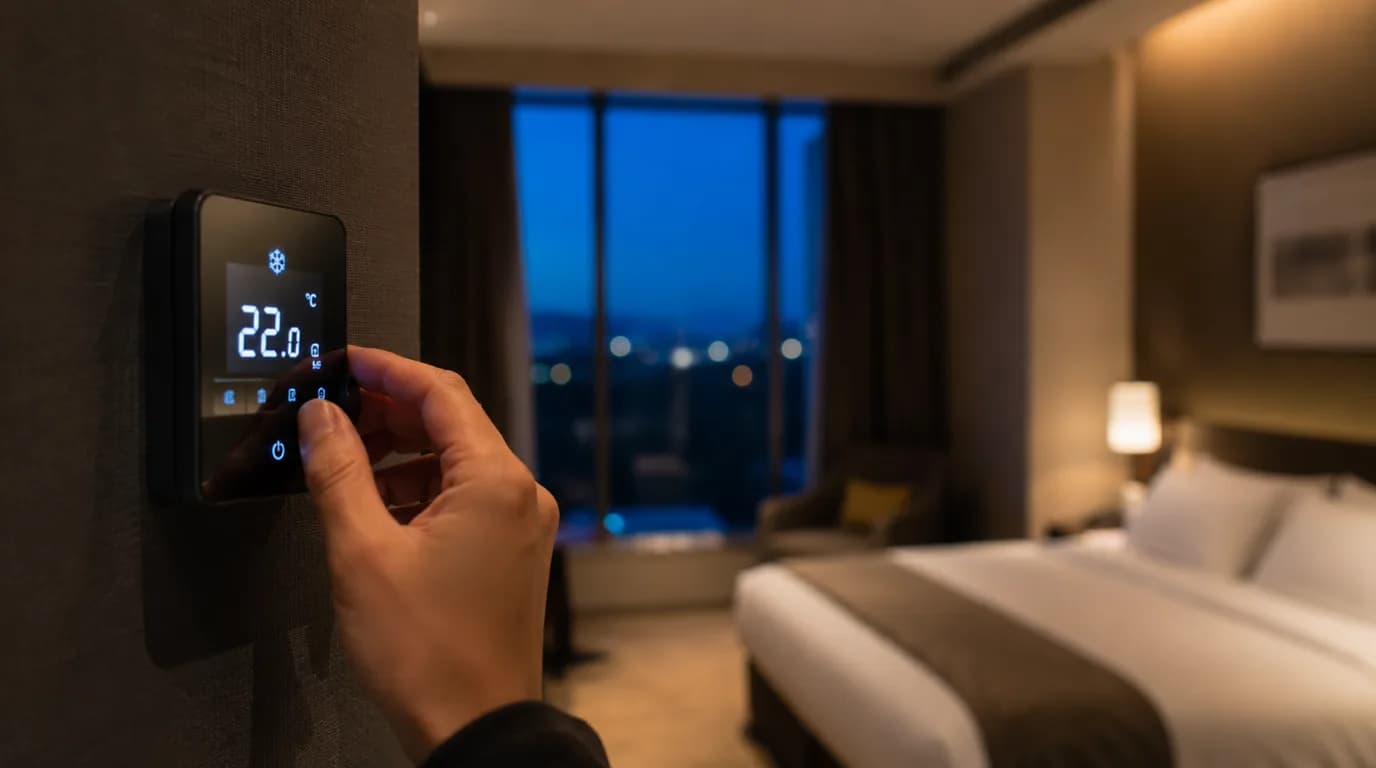
- HVAC schedules tied to occupancy and key-card power cut-offs in rooms.
- Preventive maintenance so equipment runs efficiently instead of limping.
- Monitoring consumption monthly so anomalies get caught early.
None of these touch the guest experience — and they keep paying back every month, forever.
Distribution: stop the commission creep
Over time, more business quietly routes through high-commission OTAs, and your effective cost of acquisition rises. Controlling it means actively growing direct and corporate channels and managing OTA exposure deliberately — work that sits at the seam of operations and revenue and channel strategy. The cheapest booking is the one you didn't pay 18–25% commission to acquire.
The line you must never cross
Here's the rule that separates cost control from cost cutting: never remove something the guest can feel. Thin towels, skipped amenities, slow service, deferred maintenance that becomes visible — these "savings" cost you reviews, rate and repeat stays that dwarf the money saved.
Protect the guest-facing experience fiercely. Find your savings in the engine room — productivity, purchasing, waste, energy, commissions — where efficiency is invisible to the person paying for the room.
Procurement: the quiet, compounding lever
Purchasing rarely gets the attention labour and revenue do, yet it leaks margin every single day. The fixes are unglamorous and highly effective: consolidate vendors to negotiate better rates, write clear specifications so you buy the right quality (not the most expensive or the cheapest), tender major categories periodically instead of renewing on autopilot, and stop maverick buying where individual departments order outside the system. In F&B especially, a one or two percentage-point improvement in cost of goods — invisible to the guest — flows straight to GOP and repeats on every cover, every day, all year. Procurement discipline is the definition of a quiet, compounding win, and it's a natural part of an operations consultancy review.
Make it a rhythm, not a raid
The reason cost discipline fails is the same reason most operational gains fade: it's treated as a one-time exercise. Costs drift back the moment attention moves on. The durable approach is a monthly cost review built into your operating cadence — actuals vs budget by department, variances explained, actions owned and dated. That's the same retained operating rhythm that protects every other gain, and it's why this work pairs so naturally with ongoing advisory rather than a single audit.
A simple 30-day start
You can begin this month:
- Pull last quarter's P&L and rank controllable costs largest to smallest.
- Pick the top three lines and ask, for each: where's the waste guests would never notice?
- Set one concrete action per line, with an owner and a date.
- Review the results next month — and keep the review going.
Do this consistently and you'll find margin you didn't know you had, without a single guest feeling a thing.
If you'd like an experienced, owner-side partner to find and protect that margin with you, explore our operations consultancy or book a 30-minute strategy call with The Hotel Adviser. Profit protected is profit earned — and it compounds every month you hold the discipline.
Owner's guides
Brand selection, pre-opening & feasibility playbooks — download instantly.
Frequently Asked Questions
Quick answers on cost control without cutting corners: protecting your hotel's margins in 2026.
The handful that dominate the controllable base: labour, usually the single largest, where the lever is productivity and scheduling to demand rather than lower wages; F&B cost of goods; energy; and distribution cost of acquisition.
Staffing to a fixed roster instead of to actual occupancy and arrivals. The fix is planning shifts around demand patterns — arrivals and departures by hour, restaurant covers by daypart, banquet schedules — and cross-training so a smaller, more flexible team covers peaks.
Yes, and it is the rule that separates cost control from cost cutting: never remove something the guest can feel. Thin towels, skipped amenities, slow service and deferred maintenance that becomes visible cost you reviews, rate and repeat stays that dwarf the saving.
Because it is unglamorous, yet it leaks margin daily. Consolidating vendors to negotiate better rates, writing clear specifications so you buy the right quality rather than the cheapest or most expensive, and tendering major categories are highly effective fixes.
Because they are run as a one-time exercise and costs drift back as soon as attention moves on. The durable approach is a monthly cost review inside the operating cadence: actuals against budget by department, with variances explained and actions owned.

Written by
Rachit Goel
Founder & Principal Hospitality Consultant
Founder of The Hotel Adviser and a hospitality leader with 25+ years of hands-on experience across Marriott, Radisson, Ramada and Taj — spanning pre-opening, operations, revenue management and food & beverage.