The short answer
The dishwash area silently decides the efficiency of a hotel's F&B operation, yet architects and owners routinely treat it as secondary back-end space. A well-designed one improves workflow so the team spends time with guests rather than struggling with soiled crockery, reduces breakage of expensive crockery, holds hygiene standards, lifts morale in kitchen stewarding — already one of the hardest departments to staff — and saves money through less wastage and faster turnaround between covers. Its true capacity shows after a busy breakfast, a heavy banquet clearance or peak dining hours.
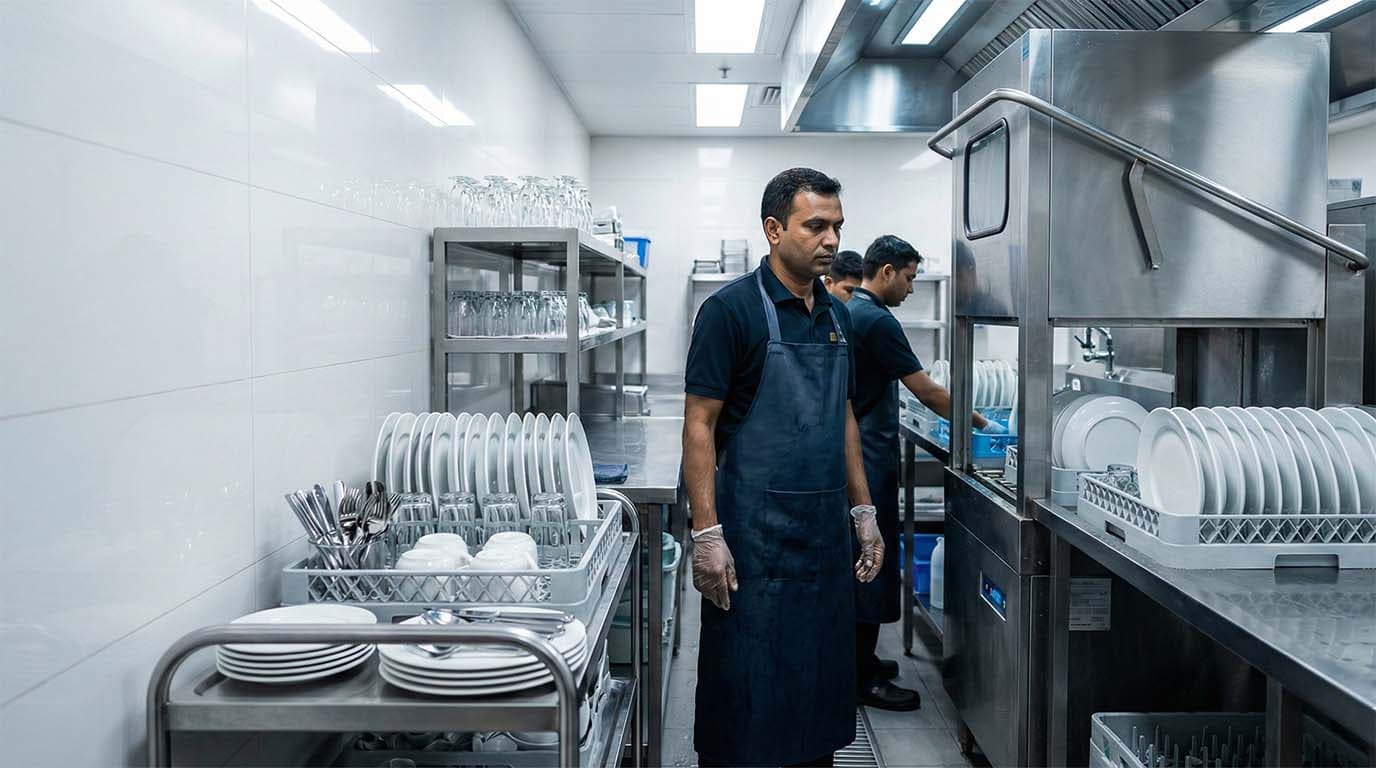
In my years of hospitality experience, especially working as a F&B professional, one consistent challenge I’ve seen is the lack of planning and space allocation for the dishwash area. Surprisingly, not much is spoken or written about it – yet it silently decides the efficiency of F&B operations.
Want to understand its importance? Just take a round of the dishwash area after:
-
A busy breakfast service
-
Heavy banquet clearance
-
Peak dining hours
You’ll immediately see the critical role it plays in F&B operations.
Unfortunately, architects and owners often overlook this space, treating it as secondary. The reality is, a well-designed dishwash area ensures:
-
Improved workflow – your team spends more time with guests instead of struggling with soiled crockery.
-
Reduced breakages – especially when using premium, high-cost crockery.
-
Better hygiene standards – a poorly designed area can quickly turn unhygienic.
-
Higher staff morale – KST (Kitchen Stewarding) is already one of the toughest departments to staff; an ill-planned dishwash area only adds to their frustration.
-
Operational savings – less wastage, lower replacement costs, and smoother turnaround time between covers.
In my view, the dishwash area is not just a back-end utility space; it’s the engine room that keeps F&B moving.
So, while planning a hotel, owners and architects must give it the importance it truly deserves.
After all, guest experience is built not just in the front-of-the-house, but also by the efficiency of the spaces no one sees.
Because sometimes, the smallest spaces make the biggest impact.
Owner's guides
Brand selection, pre-opening & feasibility playbooks — download instantly.
Frequently Asked Questions
Quick answers on the backbone of hotel f&b operations – the dishwash area.
Walk through it straight after a busy breakfast service, a heavy banquet clearance, or peak dining hours. Its real capacity, or the lack of it, is immediately visible at exactly those moments.
Improved workflow, so the team spends time with guests instead of struggling with soiled crockery; reduced breakage, which matters most with premium crockery; better hygiene standards; higher morale in kitchen stewarding; and operational savings through less wastage, lower replacement cost and faster turnaround between covers.
Because architects and owners treat it as secondary back-end utility space, and very little is written or spoken about it. In practice it is the engine room that keeps F&B moving, and guest experience is built partly by the efficiency of spaces no guest ever sees.

Written by
Rachit Goel
Founder & Principal Hospitality Consultant
Founder of The Hotel Adviser and a hospitality leader with 25+ years of hands-on experience across Marriott, Radisson, Ramada and Taj — spanning pre-opening, operations, revenue management and food & beverage.