
The short answer
Guests on MakeMyTrip, Booking.com and Agoda filter by rating before they look at photos, price or name, so a property at 4.4 and one at 3.9 are no longer competing in the same market — and AI travel assistants summarising the best hotels in an area draw on the same review data. The better operators treat the score as a number they manage weekly, the way they manage occupancy, rather than a verdict they receive; the difference shows within two quarters.

Open MakeMyTrip, Booking.com, or Agoda in your city and watch how guests actually choose. They filter by rating before they look at your photos, your price, or your name. A property at 4.4 and a property at 3.9 are not competing in the same market anymore — and increasingly, AI travel assistants summarising "best hotels near the railway station" pull from the same review data.
Most owners treat the review score as a verdict they receive. The better operators treat it as a number they manage, week by week, the same way they manage occupancy. The difference in approach shows up within two quarters.
Understand What the Score Actually Buys You
On Indian OTAs, your review score feeds three things at once: your ranking position in search results, your eligibility for badges and preferred programmes, and the rate premium the market will tolerate. A 0.2-point gap sounds trivial; compounded across thousands of search impressions a month, it is the difference between page one and page two.
A rising score lets you raise rates without losing conversion; a falling score forces you to discount to stay visible. That is why reputation work is revenue work — it sits directly upstream of your ability to increase hotel occupancy without buying it through price cuts.
Stop Chasing Heroics, Start Engineering Consistency
Hotels often respond to a bad score by adding wow gestures — a welcome drink, a towel swan. Reviews don't work that way. Guests rarely downgrade you for missing delight; they downgrade you for broken basics. Consistency beats heroics: a hotel that is reliably 8/10 for every guest outscores a hotel that is 10/10 on Tuesday and 6/10 on Saturday.
Your score is a consistency meter. The fix is operational discipline on the handful of things guests actually punish.
Attack the Four Complaint Drivers First
Read your last 100 reviews and you will find the negatives cluster around three or four themes. In Indian mid-market hotels, the usual suspects are:
- Cleanliness — bathroom hygiene, linen condition, smells in corridors and AHU-fed rooms
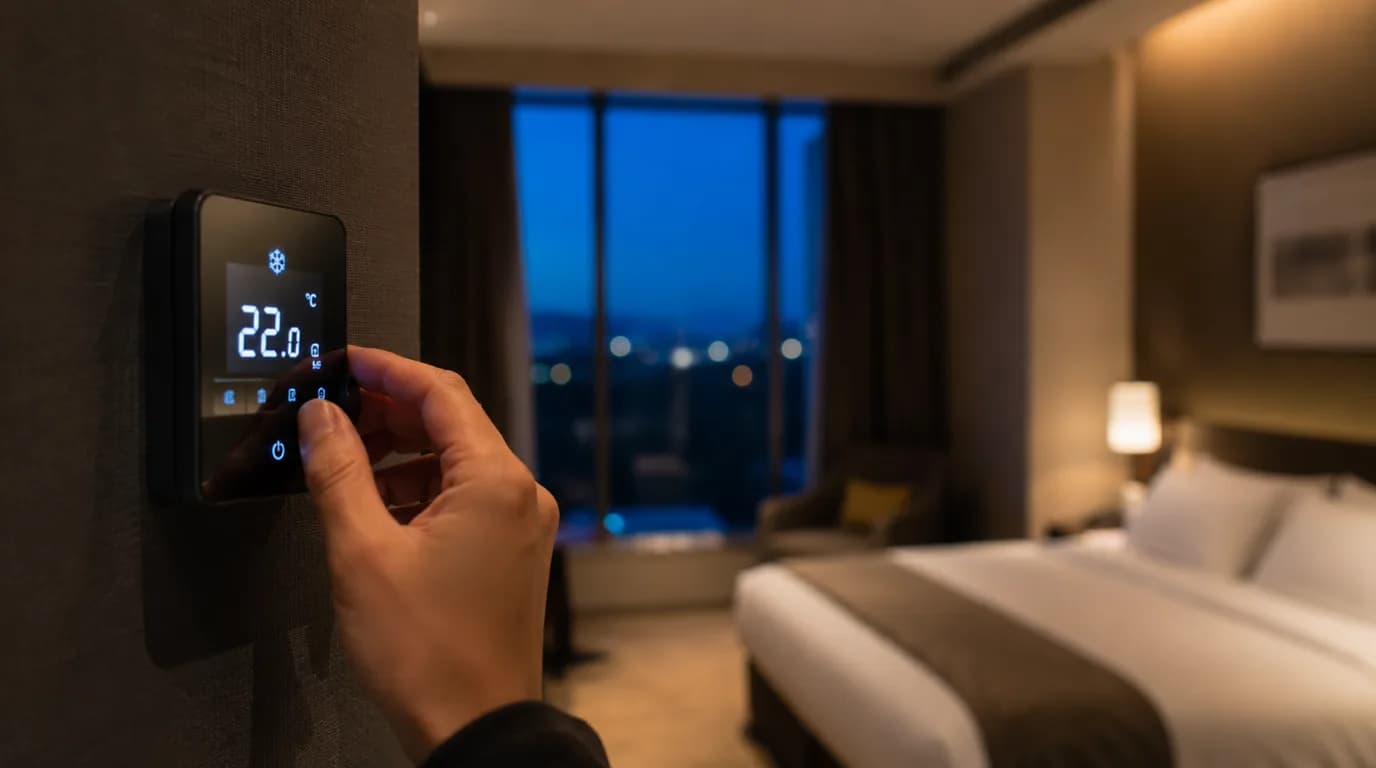
- AC and hot water — the single fastest route to a 2-star review, especially in summer and winter peaks
- Breakfast — quality and replenishment during the 8:30–9:30 rush, not the number of counters
- Check-in speed — queues at 1 pm after group arrivals, payment and ID friction
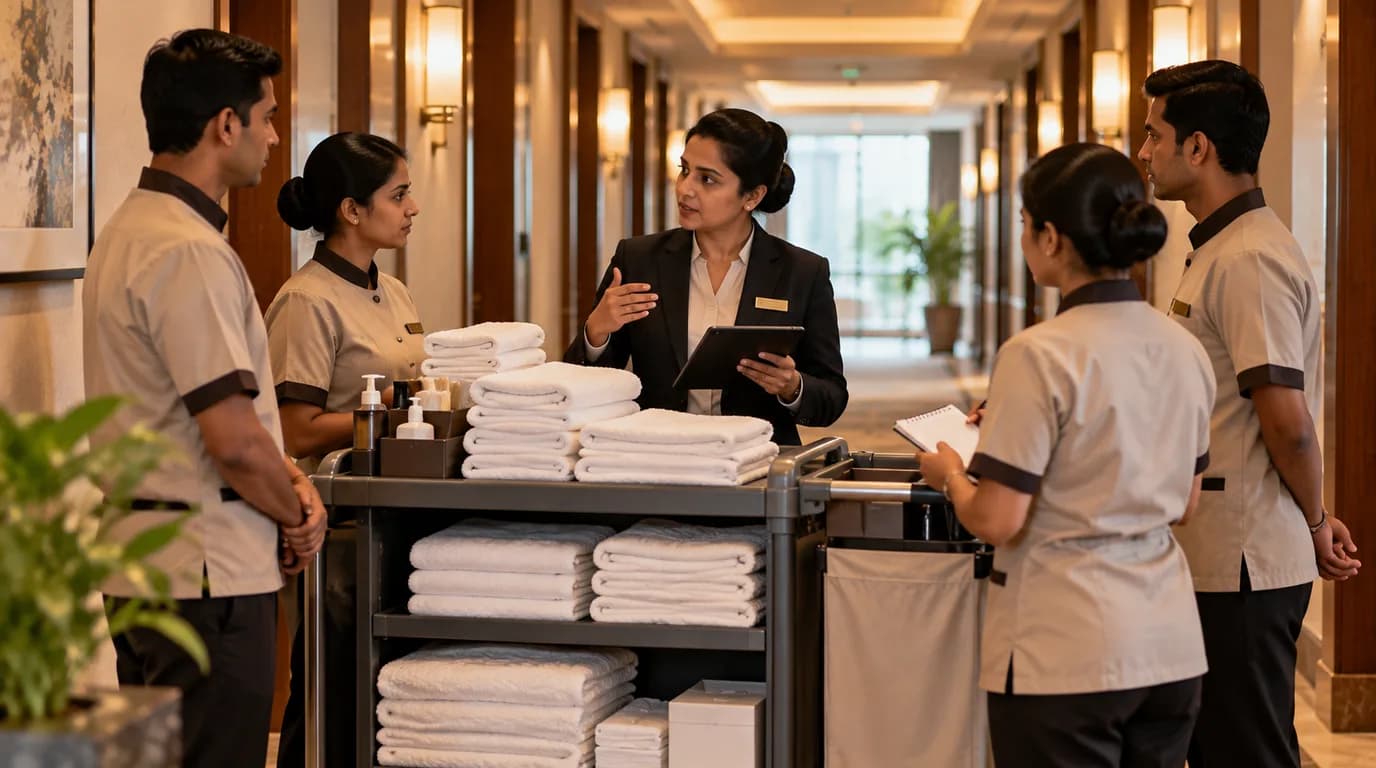
Fixing these four for every guest will move your score more than any amenity addition. Assign each driver a named owner, a standard, and a daily check.
Recover Bad Stays Before They Become Bad Reviews
Most poor reviews were visible during the stay — the guest complained at the desk, or went quiet at breakfast, and nobody closed the loop. A complaint resolved well on property usually never reaches the OTA; a complaint ignored almost always does, with interest.
Build a real system for guest complaint handling: empowered front-line staff, fast escalation, and a check-out question that surfaces unhappiness while you can still act on it. Service recovery is the cheapest review-score lever you own.
Respond to Every Review Like the Next Guest Is Reading
Because they are. Review responses are written for future bookers, not past guests. Set a discipline:
- Respond to every negative review within 48 hours — acknowledge the specific issue, state the fix, no copy-paste apologies
- Respond to positive reviews briefly and personally, mentioning the staff member when named
- Never argue publicly, even with an unfair review; a calm, factual response wins the reader
A property that responds thoughtfully to criticism converts better than one with a slightly higher score and silence under its complaints.
Ask for Reviews — the Right Way
Volume matters: a 4.3 from 900 reviews outranks a 4.3 from 90, and recent reviews weigh more. But asking clumsily backfires. The right way is timing and targeting: ask at check-out when the interaction has clearly gone well, send the post-stay message within 24 hours while memory is warm, and make it effortless with a direct link. Never incentivise reviews or filter who you ask based on promised ratings — OTAs penalise it, and it poisons your data.
Track the Score by Department, Not Just the Headline
The headline score hides the lever. Break reviews down monthly: cleanliness mentions to housekeeping, breakfast mentions to the kitchen, check-in mentions to front office. Put each department's sub-theme on the wall, review it in the monthly ops meeting, and tie supervisor recognition to movement. When housekeeping can see "cleanliness complaints: 11 last month, 4 this month," the score stops being abstract.
Start This Month
- Read your last 100 OTA reviews and tag every negative by theme; identify your top three drivers.
- Assign each driver an owner and one measurable fix with a 30-day deadline.
- Set a 48-hour response rule for negative reviews and name who owns it.
- Add a check-out question — "was everything okay with your stay?" — and a recovery path for honest answers.
- Start a monthly review-by-department scoreboard.
Review scores move slowly and then suddenly — typically one to two quarters of consistent work before the compounding kicks in. If your score has been stuck while competitors climb, book a 30-minute strategy call and we will identify exactly which drivers are holding your property back.
Owner's guides
Brand selection, pre-opening & feasibility playbooks — download instantly.
Frequently Asked Questions
Quick answers on how to improve your hotel's ota review score (and why it moves occupancy).
Three things at once: ranking position in search results, eligibility for badges and preferred programmes, and the rate premium the market will tolerate. A 0.2-point gap sounds trivial but compounds across thousands of search impressions a month.
Rarely. Guests seldom downgrade a hotel for missing delight; they downgrade it for broken basics. Consistency beats heroics — a hotel reliably at 8 out of 10 for every guest outscores one that is occasionally spectacular and often indifferent.
Read your last 100 reviews and the negatives cluster around three or four themes, usually cleanliness — bathroom hygiene, linen condition, corridor smells — and AC and hot water, which is the fastest route to a two-star review.
As if the next guest is reading, because they are. Respond to every negative review within 48 hours, acknowledging the specific issue and stating the fix with no copy-paste apologies, and reply briefly and personally to positive ones, mentioning the staff named.
Yes — a 4.3 from 900 reviews outranks a 4.3 from 90, and recent reviews weigh more. But asking clumsily backfires, so ask at check-out when the interaction has clearly gone well and send the post-stay message within 24 hours while memory is warm.

Written by
Rachit Goel
Founder & Principal Hospitality Consultant
Founder of The Hotel Adviser and a hospitality leader with 25+ years of hands-on experience across Marriott, Radisson, Ramada and Taj — spanning pre-opening, operations, revenue management and food & beverage.