
The short answer
The large majority of new branded hotel signings in India now happen outside the top metros, and expressways, new airports and better rail have put dozens of previously marginal cities within reach of real demand. The thesis is sound, but the pipeline is arriving in those same markets at once — which makes the discipline choosing the specific city, segment and site before everyone else arrives, rather than assuming the Tier-2 story is uniformly good.
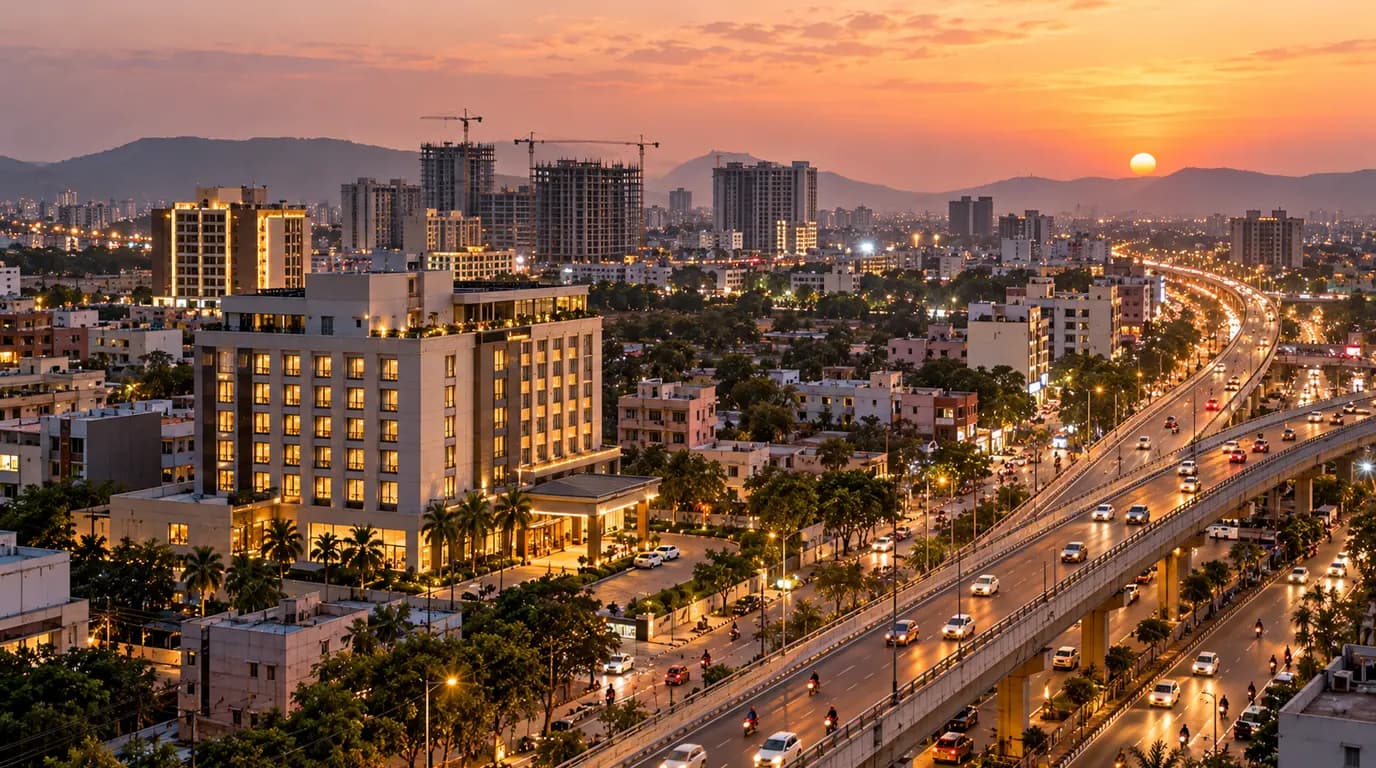
The geography of Indian hotel development has shifted decisively. The large majority of new branded hotel signings now happen outside the top metros, smaller cities have been absorbing a substantial share of hotel transaction volumes, and the branded development pipeline has grown sharply, with most of it due to complete over the next several years. Listed operators have publicly committed to adding tens of thousands of keys by the end of the decade, and a great deal of that growth is planned for exactly the markets that were considered marginal a decade ago.
The thesis behind this is sound. Connectivity has transformed what counts as a viable market — expressways, new airports and better rail have put dozens of cities within reach of real demand. Local incomes have risen, domestic travel has deepened, and wedding and religious demand in smaller cities has always been stronger than branded supply reflected. None of that is hype. What has changed is that everyone now knows it, which means "smaller city, under-supplied" has stopped being a strategy and become a starting assumption that needs testing.
The demand base needs more than one leg
The most useful question to ask about any tier-2 market is what the hotel will sell on an ordinary Tuesday in a quiet month. Headline growth figures and a shiny new airport do not answer that. A strong smaller-city market usually has several independent demand legs: a genuine corporate or industrial anchor generating weekday business, substantial wedding and social demand at weekends and in season, and often a third driver — a religious site, a university, a government presence, a highway corridor. Markets with one leg are fragile. A city whose hotel demand rests on a single large employer, or on four weeks of festival traffic, will produce a performance chart with an uncomfortable shape no matter how good the annual total looks.
Underwrite against the pipeline, not the inventory
The single most expensive mistake in smaller markets is counting the hotels that exist rather than the hotels that will exist. A market with three branded hotels today and seven under construction is not under-supplied; it is about to be competitive. Signings, land transactions, local approvals and construction activity are all visible to anyone who asks locally, and they tell you what you will actually open against. Add the unbranded supply — small hotels and guest houses that rarely appear in a branded room count but compete hard for the same value-conscious guest. The supply picture is the part of a smaller-market study most often done badly, and it is the part that determines whether your stabilised numbers hold.
Match the segment to what the market rewards
Smaller markets punish ambition more than metros do. Midscale and upper-midscale consistently work in tier-2 and tier-3 India: the demand is broad, the operating model is manageable, the build cost is proportionate, and the rate is one the market will genuinely pay. Upscale can work, but only where there is real corporate depth or destination appeal to support the rate — and in many cities there simply is not, however prosperous the city feels. The owner who builds one grade above the market, with the lobby, the specialty restaurant and the spa that grade implies, ends up carrying a cost base that the achievable rate cannot service. Choosing the right segment is more consequential in a small market than almost any other decision.
Rate ceilings are lower and harder than they look
Every smaller market has a rate ceiling, and it is usually set by one or two established local hotels that the market has been using for years. New supply can move that ceiling, but slowly and only with a visibly better product. Underwriting a tier-2 project on a rate well above the current best-in-market, achieved in year two, is optimism rather than analysis. The more defensible approach is to assume you will achieve a premium over the market average that is real but modest, and to make the project work at that number.
Operating costs do not fall as fast as rate
Owners reasonably expect costs to be lower outside the metros, and some are — land, construction and wages typically are. But several are not. Skilled staff are harder to find and often have to be brought in and housed, which costs more than hiring locally in a metro. Supply chains for F&B and consumables can be longer and less competitive. Power reliability may require investment. Brand-standard compliance costs the same wherever the hotel is. The result is that cost per available room frequently does not fall in proportion to rate, which compresses margin in exactly the markets where owners assume the opposite.
Distribution works differently away from the metros
Smaller-market hotels are often more dependent on OTAs and on a narrow set of local corporate accounts than a metro hotel of the same size, simply because brand awareness and direct demand take longer to build. That has a real cost. It also means the local sales relationships — the industrial estate, the government office, the wedding planners, the travel agents — matter disproportionately, and that a hotel which arrives without a local sales plan will ramp slowly. Plan the first two years of commercial work with the same seriousness as the construction.
Then ask the uncomfortable question
Before committing, make the project survive a pessimistic version of itself: the announced pipeline all opens, your rate premium is half what you assumed, ramp-up takes a year longer, and the single largest demand driver softens. Good tier-2 projects survive that test with a return that still justifies the capital. The ones that only work in the optimistic case are the ones that will be for sale in five years. The opportunity in smaller-city India is genuine and substantial — it simply rewards the owner who did the local work over the one who read the national headline.
Where to start this month
If you are evaluating a smaller-city hotel project:
- Name the demand legs and test what the hotel sells in a quiet week.
- Count announced supply and unbranded supply, not just operating branded rooms.
- Identify the market's rate ceiling and who currently sets it.
- Choose the segment from the demand, not from ambition.
- Build the real cost base — imported talent, longer supply chains, power.
- Write the first two years of the commercial plan before you build.
- Stress-test the project against the pessimistic case and see if it still works.
Connectivity has created genuine opportunity in dozens of Indian cities. It has also made it much easier to pick the wrong one. If you want an independent read on a tier-2 market before you commit capital, book a strategy call.
Owner's guides
Brand selection, pre-opening & feasibility playbooks — download instantly.
Frequently Asked Questions
Quick answers on tier-2 and tier-3 india: choosing a market before everyone else arrives.
Yes. The clear majority of new branded hotel signings are now outside the top metros, and smaller cities have been taking a large share of hotel transaction volumes as well. Improving air and road connectivity, rising local incomes and strong wedding and religious demand all support it. The caveat is that the trend is well known, so individual markets can go from under-supplied to crowded within a single development cycle.
A demand base with more than one leg. The strongest smaller-city markets combine a real corporate or industrial anchor with wedding and social demand, and often a religious, education or transit driver as well. A market that depends on a single employer, a single festival or a single highway is fragile, however impressive its headline growth looks.
Midscale and upper-midscale are the sweet spot in most tier-2 and tier-3 markets — broad demand, a manageable operating model and a rate the market will actually pay. Upscale works only where there is genuine corporate or destination demand to support the rate, and the temptation to build one grade above what the market rewards is the most common and expensive error in these projects.
Count what is announced, not just what is open, and include unbranded supply. A tier-2 market with four branded hotels operating and six under construction is a different proposition from the same market a year earlier. Land transactions, brand signings and local approvals are all visible if you look, and they tell you what you will be competing with on the day you open, not today.

Written by
Rachit Goel
Founder & Principal Hospitality Consultant
Founder of The Hotel Adviser and a hospitality leader with 25+ years of hands-on experience across Marriott, Radisson, Ramada and Taj — spanning pre-opening, operations, revenue management and food & beverage.