
Hotels are financed unlike almost any other real estate. An apartment project sells its inventory and exits; a hotel keeps its inventory forever and sells the same rooms again every night for decades. That single difference changes everything about how the money should be structured. Owners who finance a hotel the way they would finance a commercial building — heavy on debt, light on working capital, optimistic on timelines — tend to spend the first few years in a cash squeeze that a better capital structure would have avoided entirely.
The good news is that hotels, financed properly, are resilient long-term assets that lenders understand and back. The trick is to structure the capital for how a hotel actually behaves: expensive to build, slow to stabilise, and profitable once it does. This is a plain-English map of the pieces — debt, equity, and the timelines that catch owners out.
Know your true all-in cost first
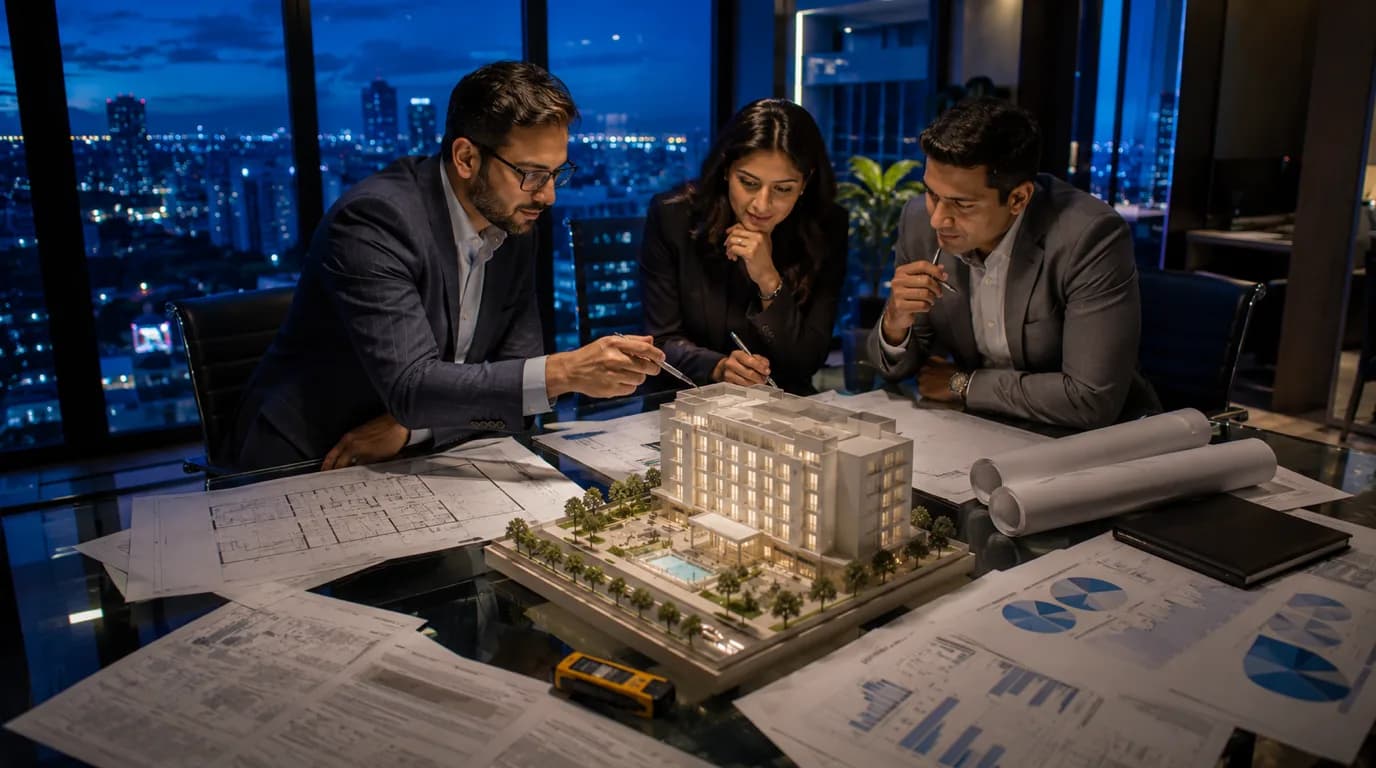
Financing starts with an honest number, and the number is almost always larger than the construction estimate. The all-in cost of a hotel includes land, construction, FF&E (furniture, fixtures and equipment), pre-opening expenses, financing costs during construction, and — critically — working capital to fund the loss-making early months. Owners who finance only the construction cost discover the gap the hard way. Getting this number right is the whole purpose of a proper feasibility study, and it is the foundation every financing decision sits on. For a fuller breakdown, see how much it costs to build a hotel in India.
The equity piece
Equity is your own capital and that of any co-investors, and it is the cushion that everything else relies on. Indian lenders typically expect meaningful owner equity in a hotel — a substantial share of project cost — because the asset takes years to stabilise and they want the owner genuinely committed. Thin equity is the single most common cause of a project stalling mid-construction: a cost overrun or a delay arrives, there is no cushion, and the whole project freezes. Budget your equity for the real all-in cost, with a contingency, not the optimistic one.
The debt piece
Debt usually comes as a term loan secured against the project, sized to what the stabilised cash flow can comfortably service. The important discipline is to size the loan against realistic, stabilised income — not peak-year projections — because you will be repaying it through the lean early years too. A well-structured hotel loan matches its repayment profile to the hotel's ramp-up: lighter in the early years when occupancy is building, heavier once the hotel stabilises. Push for a moratorium that covers construction and the first stabilising months, or the debt service will collide with your weakest cash position.
The timeline that catches everyone out
Here is the reality owners underestimate most: a hotel does not open and immediately earn its stabilised income. It ramps. It can take two to three years after opening for a new hotel to reach its mature occupancy and rate, as the market discovers it, the sales pipeline matures, and reviews accumulate. Your financing has to survive that ramp. A capital structure that only works if the hotel hits stabilised numbers in year one is a structure that will fail, because no new hotel does. Plan for the ramp explicitly — see the 30/60/90 forecasting method for how to model the early months.
Working capital: the piece everyone forgets
The most under-budgeted line in hotel finance is working capital — the cash to run a hotel that is open but not yet profitable. Salaries, utilities, and supplies are due from day one; stabilised revenue is years away. A hotel that opens without a working-capital buffer is forced to cut corners on service and marketing exactly when it most needs to build its reputation, which delays stabilisation further. Ring-fence this money separately and treat it as untouchable.
Match the structure to the asset
Pulling it together: a well-financed hotel has enough equity to absorb overruns, debt sized to stabilised cash flow with a repayment profile that respects the ramp, and a dedicated working-capital buffer. Get those three right and the hotel finances itself comfortably over its life. Get them wrong and even a good hotel in a good market spends years fighting its own balance sheet.
Where to start this month
Before you finalise how a project is funded:
- Nail the all-in cost — land, build, FF&E, pre-opening, financing, and working capital, with contingency.
- Size your equity to the real number, not the optimistic estimate.
- Structure debt against stabilised cash flow, with a moratorium covering the ramp.
- Model the two-to-three-year ramp explicitly and make sure the finance survives it.
- Ring-fence working capital as a separate, untouchable buffer.
- Stress-test the plan against a cost overrun and a slower ramp before you commit.
Financed for how a hotel actually behaves, the asset is genuinely resilient. Financed for an optimistic spreadsheet, it is fragile. If you want a second read on your project's capital structure before you commit, book a strategy call.
Owner's guides
Brand selection, pre-opening & feasibility playbooks — download instantly.

Written by
Rachit Goel
Founder & Principal Hospitality Consultant
Founder of The Hotel Adviser and a hospitality leader with 25+ years of hands-on experience across Marriott, Radisson, Ramada and Taj — spanning pre-opening, operations, revenue management and food & beverage.