
The short answer
Rate parity is the contractual commitment not to undercut an OTA's rate, and for many Indian hotels the practical result is that the most expensive place to book the property is its own website — once OTA member rates, app discounts and coupon codes have done their work. It is a pricing-strategy problem rather than just a contract term, and the margin leak comes from not knowing which forms of parity were actually agreed and which levers remain legitimately open.
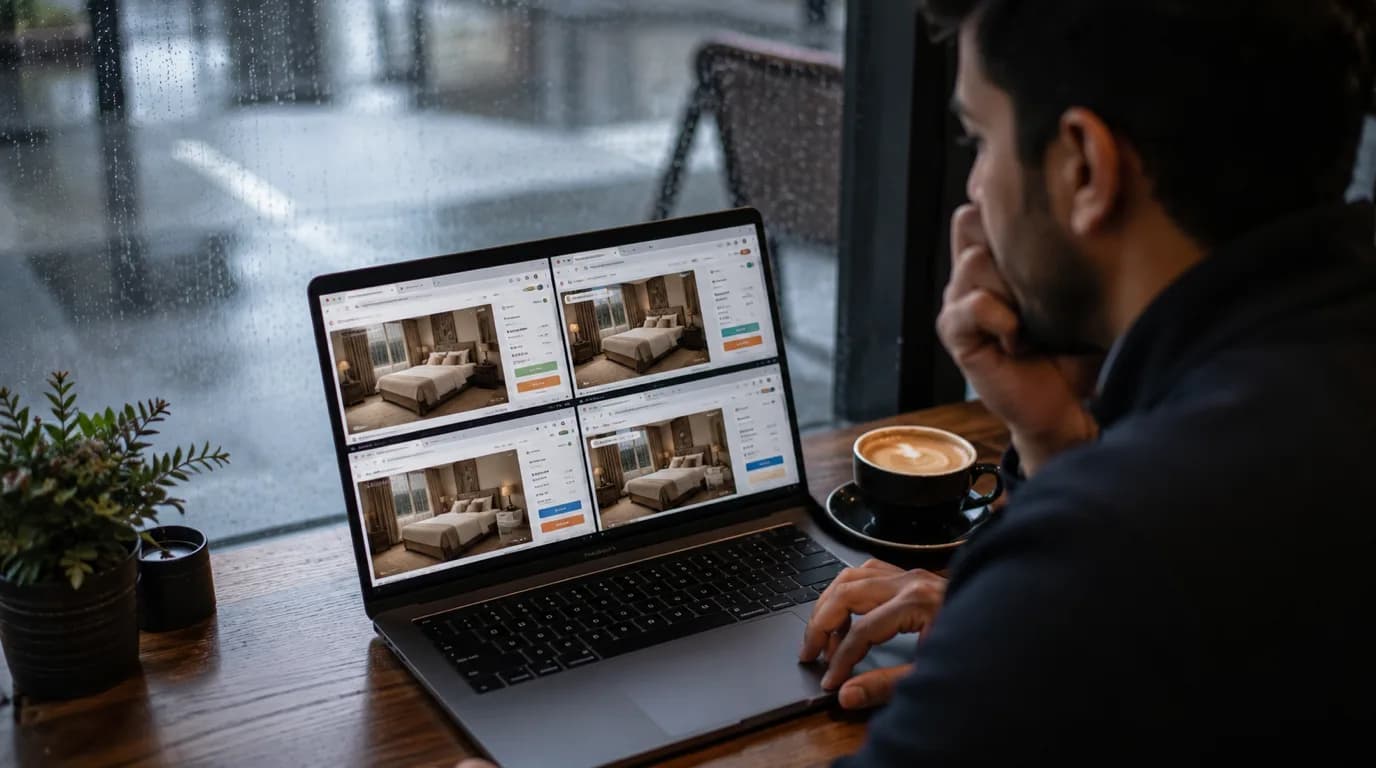
Open an incognito browser and search your own hotel for a date next month. Check your website, then MakeMyTrip, Booking.com and Agoda. For a worrying number of Indian hotels, the most expensive place to book the property is the hotel's own website — after member rates, app discounts and coupon codes have done their work on the OTA side.
That is the rate parity trap, and most owners walk into it without ever reading the clause that created it. Parity is not just a contract term; it is a pricing strategy problem, and hotels that understand it stop bleeding margin to a game designed by someone else. Let's break it down properly.
What Rate Parity Actually Means
Rate parity is the contractual promise that the same room, on the same dates, with the same conditions, carries the same public rate on every channel — including your own website. Most OTA agreements that 25–300 room Indian hotels sign include some version of this clause.
Note the word public. Parity governs rates anyone can see without logging in. It does not govern private rates, negotiated corporate rates, or rates shown only to members of a closed group. That distinction is where every legitimate strategy in this article lives.
Why OTAs Enforce It — and Why You Agreed
From the OTA's side, parity is rational: they spend enormously on marketing your hotel, and they do not want to be a showroom where guests browse and then book cheaper on your site. From your side, you signed because visibility on those platforms is genuinely valuable and the clause looked harmless.
The problem is asymmetry. You are bound to parity; the OTA, in practice, is not. Understanding that asymmetry is the whole game.
How OTAs Undercut You While You Stay in Parity
Here is what owners miss. While your public rate sits obediently level everywhere, OTAs routinely display lower effective prices:
- Member rates — logged-in users see 5–15% off, and most users are logged in.
- App-only and mobile discounts you opted into months ago and forgot.
- Coupon codes and wallet cashbacks — sometimes OTA-funded, but often funded from your margin through programmes you enrolled in.
- Bundled discounts when your room is packaged with a flight.
The result: you honour parity, they don't, and your direct channel — the one with no commission — quietly becomes your worst-priced shelf. This is one more line in your true distribution cost, alongside the commission itself; if you have not already audited that, start with how to reduce OTA commissions and stacked visibility programmes.
How to Advantage Direct Without Breaking Your Contracts
You do not need to violate a single agreement to make direct the smartest way to book. You need fences.
- Closed user groups and member rates. A simple sign-up wall on your website creates a "logged-in" rate that sits outside public parity — the same mechanism OTAs use against you.
- Value-adds instead of discounts. Same headline rate, but direct bookers get breakfast, late checkout, an upgrade on availability, or airport pickup. The price is in parity; the value is not.
- Packaging. Room plus dinner, room plus spa, wedding-guest blocks with extras — packages are different products and parity does not bite.
- Loyalty and repeat-guest pricing. Returning guests booking direct earn a private rate. Completely legitimate, and exactly where your best margin lives.
The principle: never be cheaper in public; always be better in private.
Monitor Parity Violations and Push Back
Parity enforcement should run both ways, and it only will if you make it.
- Shop your own hotel weekly — incognito, logged in, and on the apps — across MakeMyTrip, Booking.com and Agoda.
- Screenshot undercuts with dates and rate plans.
- Raise OTA-funded undercuts with your market manager in writing and ask which programme is generating the discount. Often it is something you can simply switch off; sometimes the OTA is discounting from its own commission, and you can formally dispute the display.
Hotels that monitor get taken seriously in negotiations. Hotels that don't, subsidise their own undercutting.
Where Parity Fits in Your Wider Rate Strategy
Parity discipline is pointless if the underlying rates are wrong. If your base pricing does not move with demand — wedding dates, corporate weekdays, event spikes, monsoon troughs — you are defending a flat, lazy price across channels. Get the foundations right with a proper dynamic pricing approach first; parity management then protects margin on rates that are actually intelligent.
When "Breaking" Parity Is the Right Call
Sometimes the honest answer is that a contract no longer serves you. If an OTA persistently undercuts you, stacks programmes you never agreed to, or delivers low-value, high-cancellation business, renegotiating or exiting that specific agreement is a business decision, not a sin — typically 18–25% of that channel's revenue is at stake. Do it deliberately: quantify the channel's net contribution, secure your demand alternatives first, and exit cleanly rather than playing public rate games that invite ranking penalties.
Start This Month
- Shop your own hotel across all channels, logged in and out, and document every undercut.
- Audit your OTA programmes and switch off any discount scheme funded from your margin that you cannot justify.
- Launch one closed user group rate on your website, even a simple email-unlock offer.
- Attach two value-adds to direct bookings and state them clearly on your booking page.
- Set a weekly 15-minute parity check and a written escalation routine with your OTA market managers.
If your direct channel is losing the pricing game, book a 30-minute strategy call and we will map your parity leaks and the fastest fixes for your property.
Owner's guides
Brand selection, pre-opening & feasibility playbooks — download instantly.
Frequently Asked Questions
Quick answers on hotel rate parity in 2026: what it is, why it hurts, and when to break it.
That the same room, on the same dates, with the same conditions, carries the same public rate on every channel including your own website. Most OTA agreements signed by 25-300 room Indian hotels include some version of the clause — and the operative word is public.
Through effective rather than public prices: member rates giving logged-in users 5-15% off, and most users are logged in; app-only and mobile discounts you opted into months ago and forgot; and coupon codes. Your public rate sits obediently level while the displayed price does not.
Yes, by using fences. A closed user group or member rate behind a simple sign-up wall sits outside public parity — the same mechanism OTAs use against you. Value-adds such as inclusions, upgrades and flexible terms also differentiate without touching the public rate.
Shop your own hotel weekly — incognito, logged in and on the apps — across MakeMyTrip, Booking.com and Agoda. Screenshot undercuts with dates and rate plans, and raise OTA-funded undercuts with your market manager in writing. Enforcement only runs both ways if you make it.
Sometimes the honest answer is that a contract no longer serves you. If an OTA persistently undercuts you, stacks programmes you never agreed to, or delivers low-value, high-cancellation business, renegotiating or exiting that specific agreement is a business decision rather than a sin.

Written by
Rachit Goel
Founder & Principal Hospitality Consultant
Founder of The Hotel Adviser and a hospitality leader with 25+ years of hands-on experience across Marriott, Radisson, Ramada and Taj — spanning pre-opening, operations, revenue management and food & beverage.