
The short answer
Menu engineering prices and positions each dish by what it actually contributes to profit, rather than by what the hotel has always charged or what the restaurant down the road charges. Without it, the most popular item on a hotel menu can be losing money on every plate while the most profitable dish sits unnoticed on page three. For a 25–300 room Indian hotel it is among the fastest profit improvements available because it costs almost nothing to implement.
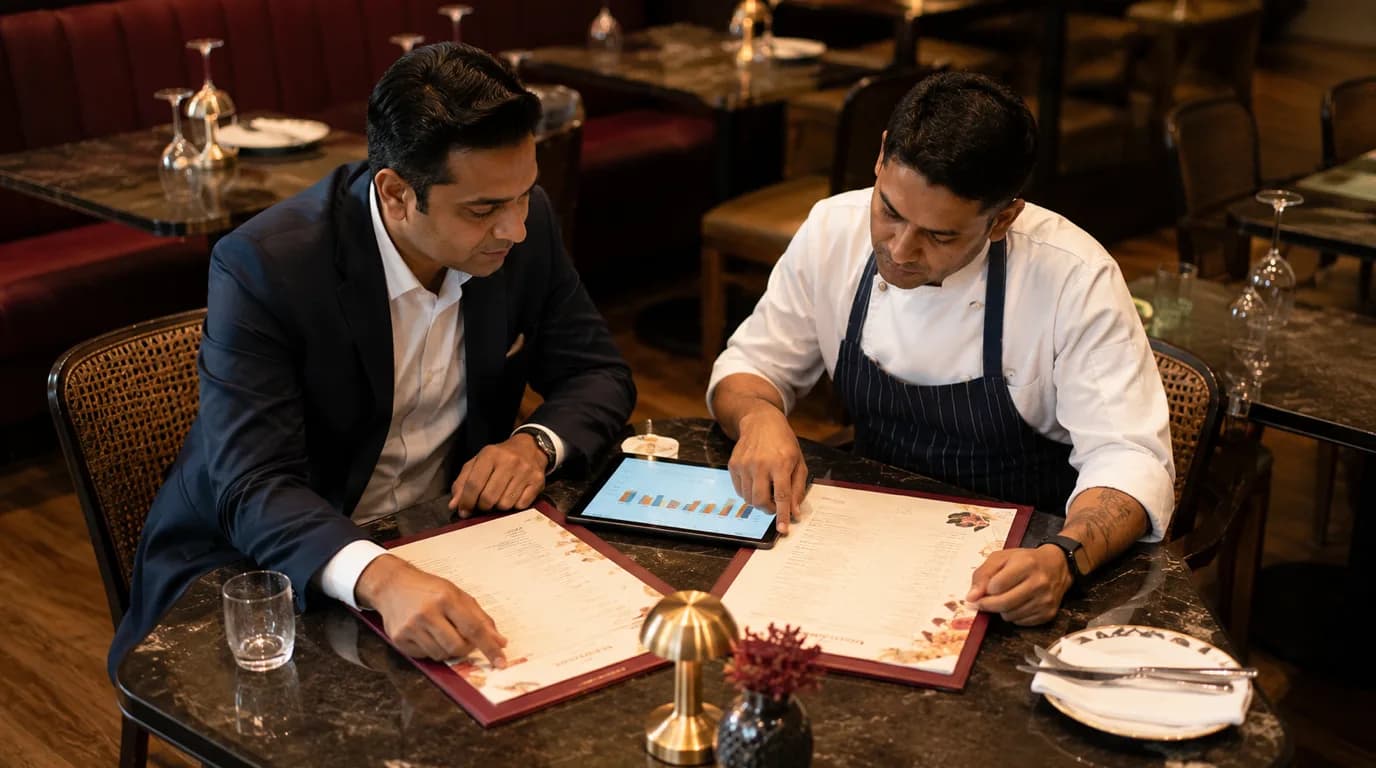
Ask a hotel F&B manager how the menu was priced and you will usually hear one of two answers: "it's what we've always charged, plus a little" or "we checked what the hotel down the road charges." Neither answer mentions the only thing that actually matters — what each dish contributes to your bottom line.
The result is a menu where your most popular item might be quietly losing you money on every plate, while your most profitable dish sits unnoticed at the bottom of page three. Menu engineering is the discipline of fixing that — and for a 25–300 room Indian hotel, it is one of the fastest profit improvements available, because it costs almost nothing to implement.
Cost Every Item First — No Exceptions
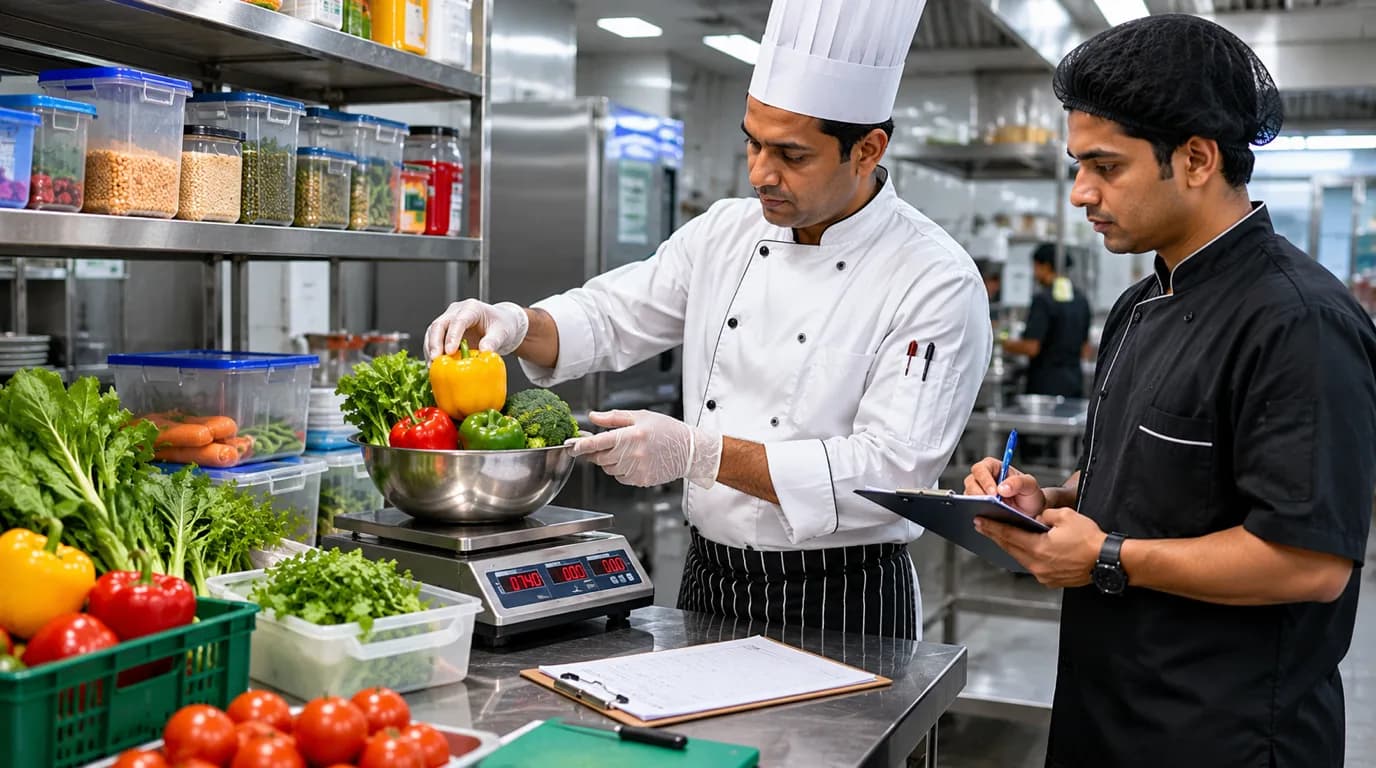
Menu engineering runs on two numbers per item: how often it sells, and how much it contributes after ingredient cost. You already have the sales data in your POS. The missing half is usually the costing — which means the prerequisite is the work covered in food cost percentage: a standard recipe card and current ingredient cost for every item on the menu.
Contribution, not percentage, is what you bank. A biryani priced at ₹450 with a 38% food cost contributes ₹279. A sandwich at ₹220 with a 28% food cost contributes ₹158. The "worse" percentage item puts nearly double the rupees in your pocket. Price for contribution, and the percentage will look after itself.
The Four-Box Matrix, in Plain Language
Plot every item on two axes — popularity (units sold versus the menu average) and contribution margin (rupees per plate versus the menu average) — and each dish lands in one of four boxes:
- Stars — popular and profitable. Protect them. Never cut their quality, keep them prominent, and train staff to recommend them.
- Plowhorses — popular but low margin. Your butter chicken, your dal-roti combos. Don't delete them; re-engineer them: trim ingredient cost carefully, adjust portion architecture, or take a modest price increase — popular items can usually absorb ₹20–40 without resistance.
- Puzzles — profitable but slow-selling. Often a naming, description, or placement problem. Rename, reposition, have servers suggest them. If they still don't move after a quarter, demote them.
- Dogs — unpopular and unprofitable. Remove them. Every dog adds prep complexity, inventory risk, and menu clutter for nothing in return.
Run this analysis quarterly. Menus drift just like food cost does.
Use Placement and Description Psychology — Without Gimmicks
Guests don't read menus; they scan them. Use that honestly:
- Position your stars where eyes land first — top of a category, first page, or in a highlighted box.
- Write descriptions that earn the price. "Paneer tikka" justifies ₹280; "char-grilled malai paneer tikka, house-ground masala, mint chutney" justifies ₹380 — provided the plate delivers.
- Drop the price column alignment. A neat right-aligned column of prices invites comparison shopping down the list. Place the price quietly after the description instead.
- Limit choice. Beyond roughly 8–10 items per category, guests default to the cheapest familiar option. A tighter menu sells better and runs a cleaner kitchen.
No fake scarcity, no manipulative tricks. Just make your best items easy to find and easy to want.
Build Price Ladders, Not Price Walls
A menu with one price point per craving forces a yes/no decision. A ladder turns it into a which-one decision. Offer the half/full tandoori, the regular and large thali, the 250g and 400g grill. Most guests pick the middle or upper rung, and your average contribution per guest rises without a single price increase.
Combos and add-ons work the same way: a beverage-and-starter pairing, a ₹60 extra raita or papad basket, a dessert add-on offered at billing. Each add-on is nearly pure contribution because the guest, the table, and the service are already paid for.
Respect the Indian Menu's Economics
Indian hotel menus have their own arithmetic, and engineering them means working with it:
- Thali economics — a well-designed thali is a margin machine: high perceived value, controlled portions, and a base of dal, rice, and seasonal vegetables that costs far less than it looks. A badly designed one, refilled without limits, is a slow leak.
- Veg/non-veg mix — vegetarian items typically run meaningfully better margins than non-veg. You don't need to push veg on anyone; simply make sure your vegetarian stars get premium placement and premium descriptions instead of being treated as the "default" section.
- Banquet menus too — the same matrix applies to your wedding and conference packages. Engineer each package tier so the dishes guests remember are affordable to deliver, and the expensive crowd-pleasers are balanced by high-margin anchors.
Measure the Result, Then Iterate
Menu engineering without measurement is redecorating. After every menu change, track three things: item-level sales mix, total contribution per day, and average per cover (APC) — the restaurant's equivalent of ADR. If APC and total contribution rise while covers hold steady, the engineering worked. If covers fall, you've pushed pricing past what your market will carry, and you adjust.
Treat the menu as a living P&L document, not a laminated artifact. The hotels that re-engineer quarterly compound small gains into a visibly different bottom line within a year.
Start This Month
- Pull 90 days of item-level sales data from your POS.
- Cost your full menu — every item, current prices, recipe cards.
- Build the four-box matrix and classify every dish.
- Make five changes: reprice two plowhorses, reposition two puzzles, delete one dog.
- Review APC and contribution after 30 days and lock in what worked.
If you'd like an experienced second pair of eyes on your menu — costing, matrix, pricing, and the redesign — book a 30-minute strategy call and bring your current menu along.
Owner's guides
Brand selection, pre-opening & feasibility playbooks — download instantly.
Frequently Asked Questions
Quick answers on menu engineering for hotel restaurants: price for profit, not volume.
How often each item sells, and how much it contributes after ingredient cost. The sales data is already in your POS; the missing half is usually the costing, which means standard recipe cards at current prices are the prerequisite.
Plot every item on popularity against contribution margin, each measured versus the menu average. Stars are popular and profitable and should be protected and kept prominent; plowhorses are popular but thin; puzzles are profitable but overlooked; dogs are neither and should go.
A great deal, because guests scan rather than read. Position stars where eyes land first — top of a category, first page, or a highlighted box — and write descriptions that earn the price: paneer tikka justifies ₹280, char-grilled malai paneer tikka with house-ground masala justifies more.
A menu with one price point per craving forces a yes or no decision; a ladder turns it into a which-one decision — half or full tandoori, regular or large thali, 250g or 400g grill. Most guests pick the middle or upper rung, lifting average contribution per guest without raising a single price.
Track item-level sales mix, total contribution per day, and average per cover, which is the restaurant's equivalent of ADR. If APC and total contribution rise while covers hold steady, it worked. Without measurement, menu engineering is just redecorating.

Written by
Rachit Goel
Founder & Principal Hospitality Consultant
Founder of The Hotel Adviser and a hospitality leader with 25+ years of hands-on experience across Marriott, Radisson, Ramada and Taj — spanning pre-opening, operations, revenue management and food & beverage.