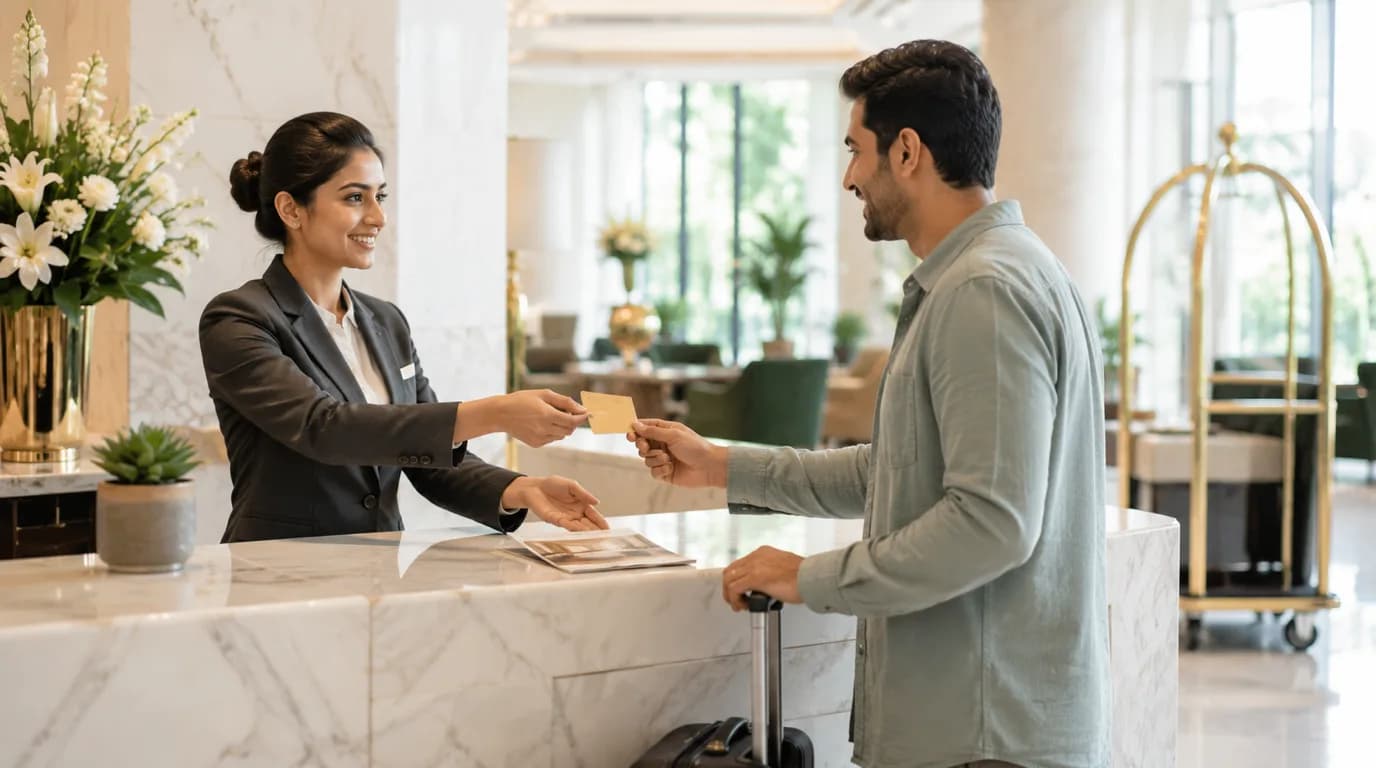


In August 2026, Google began letting travellers complete hotel bookings inside AI Mode. The launch partners were a handful of large chains and a handful of large OTAs. If you own or run an independent hotel in India, that single detail tells you most of what you need to know about where this is heading: a new booking surface is being built, and the first seats at the table went to the companies with the cleanest data and the biggest distribution teams.
Meanwhile the trip-planning layer has kept moving. Travellers are using AI assistants to narrow destinations, build itineraries and shortlist properties before they ever open a conventional search results page. The OTAs have not been disintermediated by any of this — they have been busy buying and building their way into it. What has changed is the first step of the funnel. For a growing share of guests, the shortlist is now assembled by a machine reading structured information about your hotel, and only then shown to a human.
The shortlist happens before the search
The practical shift is that discovery and consideration have collapsed into one step. A traveller who once searched, compared six properties, read reviews and chose, now asks an assistant for three good options near a location for a particular kind of trip and receives an answer. By the time a human is involved, the field has been narrowed. You are either in that set of three or you are invisible, and no amount of persuasive website copy helps a hotel that was never put in front of the guest. The work has moved upstream, from convincing a visitor to being selectable by a model. The way guests now find hotels rewards properties that are easy for machines to understand.
Machines reward clean facts, not clever copy
AI systems build answers from sources they can parse and corroborate. That makes unglamorous data hygiene the highest-leverage marketing work available to a hotel right now. Accurate structured data describing the property, its rooms, its amenities and its location. A complete, current Google Business Profile with correct categories, hours, facilities and photographs. Identical name, address and phone details everywhere you appear. Factual, specific answers to the questions guests genuinely ask — where you are relative to the airport and the station, whether there is parking, whether the restaurant is pure vegetarian, what time check-in is, whether the pool is open. Vague, adjective-heavy copy that cannot be reduced to a fact is invisible to this layer.
Your rate and availability data is now marketing
For years, hotels treated distribution data as an operational chore and their website as the marketing. That has inverted. If an assistant is going to present your hotel with a price and then hand the traveller somewhere to transact, the accuracy of your rate and availability across every connected channel becomes a visibility issue, not just a parity issue. Stale rates, closed-out inventory that is actually available, mismatched room descriptions and broken connectivity all make a property harder to surface and easier to skip. The hotels that benefit from this shift will be the ones whose channel manager, booking engine and PMS tell a consistent story at all times.
Reviews are the trust layer the model reads
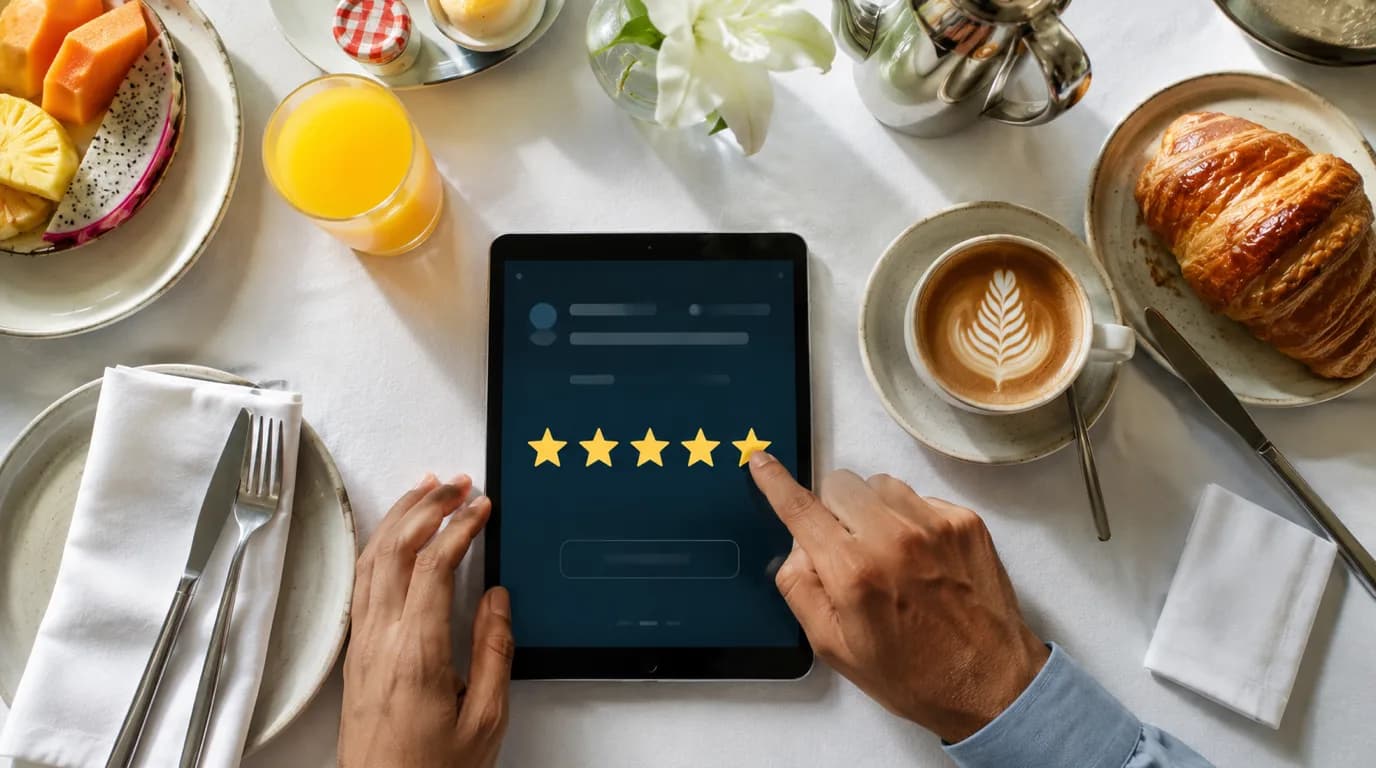
Every AI answer about a hotel is shaped by what third parties say about it. Review volume, recency, rating and — increasingly — the specific themes inside the text all feed the model's judgement of whether you are a credible recommendation for a given trip. A property with fifty reviews from two years ago is harder to recommend than one with a steady stream of recent, detailed, responded-to feedback. Actively generating reviews and responding to them is no longer reputation management alone; it is how you stay in consideration sets.
Own the place where the booking lands
As assistants start routing travellers to somewhere to transact, the question of who owns that destination becomes the commercial question. If a hotel can take a booking directly — live rates, real availability, a checkout that works on a phone in a few taps — it keeps the margin on demand that AI generated. If it cannot, the traveller is handed to whoever can, and the commission goes with them. This is why the groundwork of direct booking and digital distribution matters more in an AI-mediated market, not less. The chains that got early seats at Google's table got them partly because their booking infrastructure was ready.
Measure it, or you will miss it
Most hotels cannot currently answer the question "how much business came from AI assistants last month" because their analytics do not separate it. That is worth fixing now, while the volumes are small enough to learn from. Segment your traffic by referrer so AI sources are visible, watch what those sessions do — they typically convert differently from conventional search traffic — and track the queries and themes that bring them. A channel you cannot see is a channel you cannot argue for budget against.
Do not abandon the fundamentals
It is tempting to treat this as a new discipline requiring new tactics. Mostly it is not. Crawlable, fast pages; genuine depth on the subjects you want to be known for; correct structured data; strong local signals; credible reviews; accurate distribution; a booking engine that converts. These were the right answers before AI search and they remain the right answers, because they are what makes a hotel legible and trustworthy to any system — human or machine. What has changed is the cost of neglecting them: a hotel with messy data used to rank poorly, and now it simply does not get mentioned.
Where to start this month
To stay visible as AI takes over the first step of the funnel:
- Audit your structured data — property, rooms, amenities, location, policies.
- Complete and correct your Google Business Profile, including photos and facilities.
- Fix name, address and phone consistency across every listing and directory.
- Write factual answers to the twenty questions guests ask most, on your own site.
- Verify rate and availability accuracy across every connected channel.
- Build a steady review engine — volume, recency and genuine responses.
- Segment AI referral traffic in analytics so you can see the channel growing.
The hotels that will do well out of this are not the ones chasing a new tactic. They are the ones whose facts are clean, whose distribution is accurate, and who can take a booking the moment a guest is sent their way. If you want a clear view of how your hotel currently appears to AI search and what to fix first, book a strategy call.
Owner's guides
Brand selection, pre-opening & feasibility playbooks — download instantly.
Frequently Asked Questions
Quick answers on when ai does the searching: getting your hotel found and booked in 2026.
Yes, and it is measurable. Properties that segment their analytics by referrer are seeing consistent, if still modest, sessions from ChatGPT, Perplexity, Claude and Google's AI surfaces. The volumes are small next to conventional search, but the intent is unusually high because the traveller arrives already shortlisted rather than still browsing.
Give the machines clean, structured, consistent facts. Accurate Hotel schema on your site, a complete and current Google Business Profile, consistent name-address-phone details everywhere you appear, factual answers to the questions guests actually ask, and accurate rate and availability data in every channel you feed. AI tools assemble answers from sources they can parse and trust; ambiguity gets you left out.
More than before. As AI assistants start routing travellers to a place to transact, the properties that can accept a booking directly, with accurate live rates and a frictionless checkout, keep the margin. Those that cannot get handed to whichever intermediary can, and pay the commission for it.
No, but it has changed shape. Ranking a page is no longer the whole objective; being the source an AI answer is built from is. That still rests on the same foundations — crawlable pages, genuine subject-matter depth, structured data, local signals and credible reviews — but it rewards clear, factual, well-organised content over keyword-led pages written to rank.
About the Guest Writer

Chandan Kumar
Founder, Global Info Edge
Chandan Kumar is the founder of Global Info Edge, a digital growth agency that builds high-performance websites and runs measurable digital marketing for hospitality and service brands — including the platform you're reading this on. He writes about how hotels get found, chosen and booked online.
View profile