
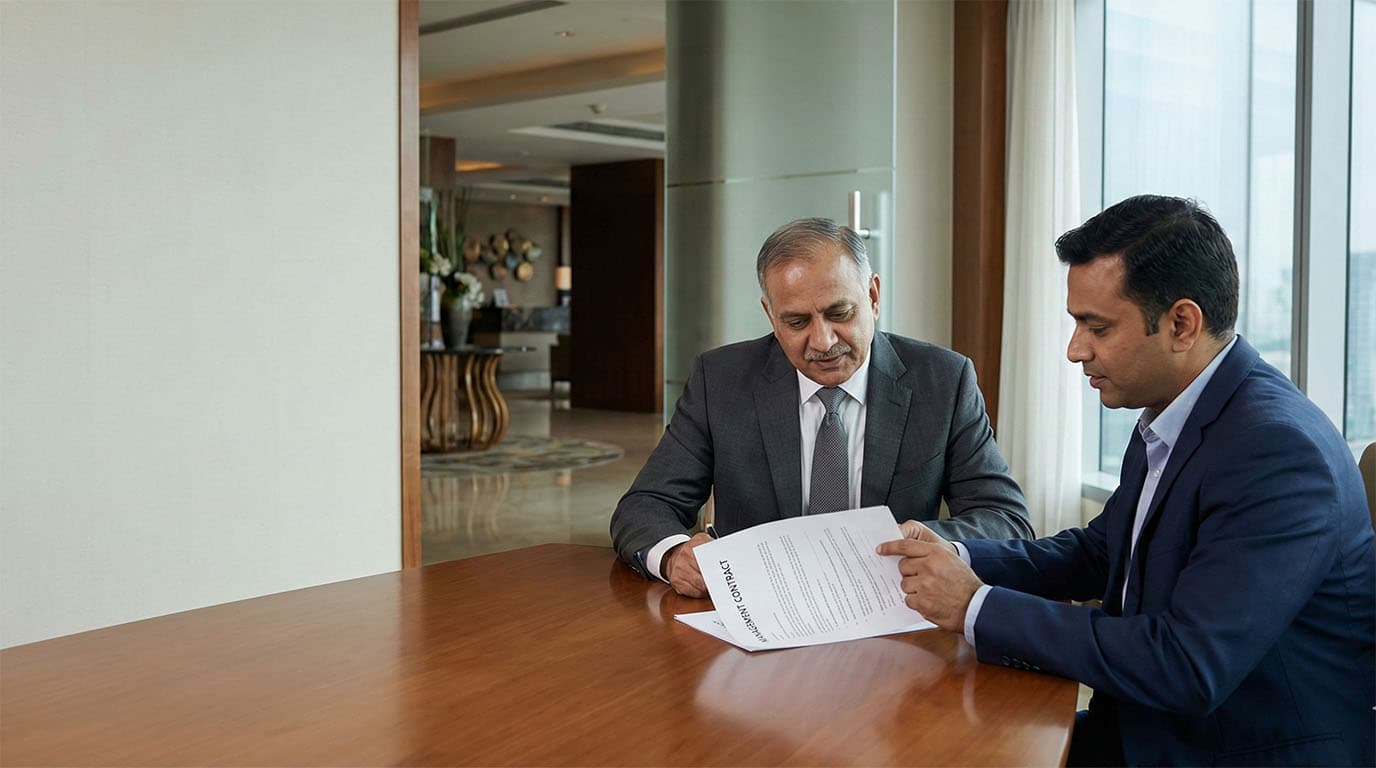
When an owner signs with a hotel brand, most of the attention goes to the management or franchise agreement — the fees, the term, the performance test. But there is a second contract that governs the years before the hotel opens, and it is one owners routinely sign without the same scrutiny: the Technical Services Agreement, or TSA. It covers the design and development phase, and the money and decisions it governs are substantial.
The TSA is where the brand lends its expertise to make sure the building you construct will actually meet its standards and open on time. Handled well, it saves you from expensive mistakes and rework. Handled carelessly, it becomes a channel for fees and delays with little accountability. Because it is signed early, when everyone is optimistic and eager to start, it gets less negotiation than it deserves. It should get more.
What a TSA is for
A TSA sets out the technical support the operator provides during design and construction — reviewing your architect's drawings, ensuring the layouts, guest rooms, kitchens, and back-of-house meet brand standards, and guiding you toward an efficient, brand-compliant building. The logic is sound: the operator knows what a hotel of their brand needs to work operationally, and catching a flaw on a drawing is vastly cheaper than fixing it in concrete. The support is real value — when it is delivered.
What you actually pay for
The TSA carries its own fee, separate from the management fees that begin at opening. It is usually a lump sum or a schedule of payments tied to design milestones, and it can be significant. What you are buying is a defined scope of reviews, comments, and approvals — plan checks, mock-up sign-offs, and technical guidance. The critical word is defined: a good TSA lists exactly what the operator will review, how many rounds of comments they will give, and by when. A vague TSA lets the fee grow while the accountability stays soft.
Review and approval, not design
Here is the distinction owners most often miss. Under most TSAs, the operator reviews and approves — they do not design your hotel. Your architects, engineers, and consultants remain responsible for the actual design and its compliance with local codes. The operator checks it against their brand standards. This matters for two reasons: you still need and pay for a full design team, and the operator's approval of a drawing does not transfer liability for its correctness to them. Owners who assume the brand is "designing the hotel" end up under-resourcing their own consultants.
The clauses that decide whether it works
A few provisions separate a TSA that helps from one that frustrates:
- Scope and turnaround. Exactly what is reviewed, how many comment rounds, and — crucially — how quickly, because a brand that takes six weeks to return drawings can delay your whole programme.
- Fee schedule and triggers. What is paid, when, and what happens to the fee if the project is paused, delayed, or cancelled.
- Brand-standard changes. What happens if the operator updates its standards mid-project and your half-built hotel no longer complies — who pays for the change.
- Termination. Your rights if you and the operator part ways before opening, and what happens to the TSA fee already paid.
How it fits with the management agreement
The TSA and the management or franchise agreement are two halves of one relationship, and they should be negotiated together, not in sequence. The leverage you have while the operator is still competing for your hotel applies to both. Treating the TSA as an afterthought — signed quickly so construction can start — hands away negotiating power you will wish you had kept. The same disciplined approach that protects you on management-contract fees belongs here too, and a proper brand search and contract negotiation treats the two as a package.
Where to start this month
Before you sign a TSA, or if you are mid-way through one:
- Get the scope in writing — every review, every approval, every deliverable named.
- Fix turnaround times for the operator's comments, with consequences for delay.
- Understand the fee schedule and what happens to it if the project stalls or cancels.
- Keep your own design team fully resourced — the operator reviews, it does not design.
- Pin down brand-standard-change liability so a mid-project update isn't your bill.
- Negotiate the TSA and management agreement together, while you still have leverage.
The TSA is a genuinely useful contract that quietly shapes your build cost and your opening date. Give it the scrutiny you give the management agreement, because it deserves it. If you have a TSA in front of you and want an independent read, book a strategy call.
Owner's guides
Brand selection, pre-opening & feasibility playbooks — download instantly.

Written by
Rachit Goel
Founder & Principal Hospitality Consultant
Founder of The Hotel Adviser and a hospitality leader with 25+ years of hands-on experience across Marriott, Radisson, Ramada and Taj — spanning pre-opening, operations, revenue management and food & beverage.